▶ Watch the original YouTube video
A legendary scene from the original Mobile Suit Gundam continues to captivate audiences decades after its 1979 broadcast. Through fan reactions and detailed analysis, we explore why this brief moment of tactical support fire has become one of anime’s most discussed and celebrated sequences, revealing deeper truths about the series’ construction and lasting influence on the medium.
What Happened
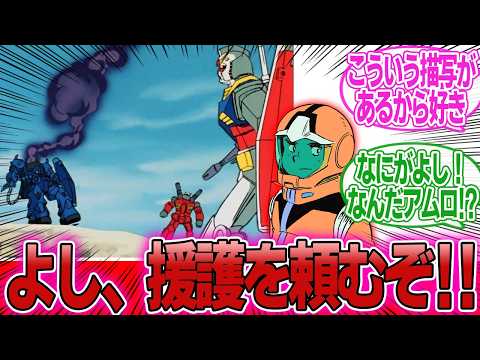
In a pivotal combat sequence from the original Mobile Suit Gundam, protagonist Amuro Ray delivers the line “That’s the last one” (“Ima ga saigo da”) while directing support fire from his teammate Hayato’s Guncannon mobile suit. The scene depicts a moment of tactical coordination where Amuro, piloting the titular Gundam, relies on his ally’s covering fire to execute a critical maneuver. This brief exchange has become the subject of extensive fan discussion and analysis across online communities, with viewers praising both the animation quality and the strategic depth embedded within the sequence.
Why It Matters
This scene encapsulates the fundamental design philosophy of the original Gundam series: combining technical realism with character development through tactical warfare. Unlike modern mecha anime that prioritize visual spectacle, the original Gundam grounds its combat in resource management, teamwork, and pilot skill. The “That’s the last one” moment demonstrates how a few seconds of animation can convey multiple layers of narrative information—Amuro’s growth as a pilot, the limitations of his mobile suit’s energy systems, and the critical importance of coordinated team tactics. This approach has influenced mecha anime design for over four decades and continues to resonate with both longtime fans and new viewers discovering the series.
Background
Mobile Suit Gundam premiered in 1979 during an era when anime production faced significant technical and budgetary constraints. The series was groundbreaking in treating giant robot warfare with military realism rather than pure fantasy. The show’s narrative follows Amuro Ray, a teenage civilian who becomes a mobile suit pilot for the Earth Federation during a brutal interplanetary conflict. Throughout the series, Amuro’s development from inexperienced youth to skilled warrior is marked by his increasing reliance on teamwork and tactical thinking rather than individual heroics.
The scene in question occurs during a critical battle sequence where Amuro must coordinate with Hayato Kobayashi, another Federation pilot. The Gundam’s beam rifle and beam saber are depicted with realistic energy constraints—the beam saber’s energy gradually depletes during extended use, and ammunition is finite. This attention to resource management was revolutionary for the mecha genre and established a template that influenced subsequent Gundam series and other robot anime.
Key Points
- The “That’s the last one” scene represents a crucial moment of character growth, showing Amuro transitioning from solo combat to team-based tactics
- The sequence demonstrates the original Gundam’s commitment to tactical realism, including energy management and support fire mechanics that directly impact combat effectiveness
- Fan analysis reveals appreciation for minute details such as the beam saber’s energy depletion and the specific armor properties of different mobile suits
- The scene exemplifies how the original series embedded narrative and character development within action sequences, contrasting with modern anime’s emphasis on visual spectacle
- Online fan discussions reveal deep engagement with the series’ technical specifications and military strategy, indicating the work’s lasting intellectual appeal
- The scene’s continued relevance demonstrates how thoughtful character moments and tactical storytelling create more enduring impact than pure visual effects
Timeline
- 1979: Mobile Suit Gundam premieres with the original series featuring the iconic scene
- 1979-1980: Series concludes with 43 episodes, establishing foundational mecha anime conventions
- 1980s-2000s: Multiple Gundam sequels and spin-offs explore similar themes with varying emphasis on tactical realism versus visual spectacle
- 2000s-2010s: Fan communities develop extensive technical analyses and comparisons across Gundam series
- Present: The original series experiences renewed appreciation as modern anime fans discover its narrative sophistication and technical depth
Perspectives
Fan reactions to the scene reveal multiple layers of appreciation. Some viewers focus on the animation quality and the satisfying visual representation of support fire mechanics. Others engage in detailed technical analysis, discussing the armor properties of the Guncannon, the energy consumption rates of beam weapons, and the tactical implications of Amuro’s decision-making. A third perspective emphasizes character psychology, interpreting the scene as evidence of Amuro’s development and his growing trust in his teammates.
Comparative analysis with later Gundam series reveals a significant philosophical shift. Series like Gundam SEED and Gundam 00 prioritize more visually spectacular combat sequences with less emphasis on energy constraints and support mechanics. Gundam Wing focuses heavily on individual pilot skill and hand-to-hand combat prowess. In contrast, the original series maintains consistent attention to resource limitation and team coordination, reflecting 1970s Japanese cultural values emphasizing efficiency and collective effort.
Some fans debate the technical consistency of the scene, noting apparent variations in weapon effectiveness across different episodes. However, this apparent inconsistency likely reflects the production realities of weekly television animation in 1979, when animation teams relied on reusable sequences (“bank” footage) to meet broadcast deadlines. Rather than diminishing the scene’s impact, these production constraints paradoxically enhanced the narrative’s authenticity by forcing creators to prioritize storytelling over technical perfection.
Insights
The enduring appeal of the “That’s the last one” scene reveals fundamental truths about what makes anime narratives resonate across generations. While modern productions often assume that visual spectacle and technical animation quality determine viewer engagement, the original Gundam demonstrates that thoughtful character development, tactical coherence, and thematic consistency create deeper and more lasting impact.
The scene’s significance extends beyond nostalgia. It represents a moment where multiple narrative elements—character psychology, world-building through technical specifications, team dynamics, and visual storytelling—converge seamlessly. This integration of form and content created a template that continues influencing mecha anime production, as evidenced by recent series like Mobile Suit Gundam: The Witch from Mercury, which similarly emphasizes tactical strategy and character relationships within combat sequences.
Fan engagement with this scene also demonstrates how audiences actively participate in creating meaning within media. The term “White Devil” (referring to the Gundam’s white color scheme) originated not from the series itself but from fan culture, showing how viewers transform source material through interpretation and discussion. This participatory relationship between creators and audience represents one of anime’s most distinctive cultural features, and the original Gundam series pioneered this dynamic.
The scene’s continued relevance in an era of advanced animation technology suggests that viewers increasingly value narrative substance and character authenticity over pure visual spectacle. As modern anime production becomes more technically sophisticated, the original Gundam’s emphasis on meaningful storytelling within resource constraints offers valuable lessons for contemporary creators. The “That’s the last one” moment endures not because of its animation quality by modern standards, but because it represents storytelling at its most efficient and effective—conveying character growth, tactical complexity, and emotional stakes within seconds of screen time.