▶ Watch the original YouTube video
A viral video exploring why adults compulsively mimic Kamen Rider transformation poses reveals deeper psychological patterns about nostalgia, design perfection, and the preservation of childhood wonder. After 15 years of analyzing anime, games, and tokusatsu works, one fan discovered that this seemingly childish behavior actually reflects a sophisticated human need to reconnect with pure joy and authenticity.
What Happened
A YouTube video featuring viewer testimonies sparked widespread discussion about adults secretly performing Kamen Rider transformation poses in private moments—from empty office corridors to home bathrooms. The video highlighted a curious phenomenon: grown men and women regularly recreate these iconic gestures despite social pressure to abandon such “childish” behavior. Viewers shared candid confessions about performing poses daily, with particular enthusiasm for Showa-era Riders like Kamen Rider Black, while expressing frustration with increasingly complex modern designs.
Why It Matters
This phenomenon reveals important truths about how beloved media shapes adult psychology and behavior. The discussion transcends simple nostalgia, touching on design philosophy, physical wellness, stress relief, and the human need to maintain connection with authentic joy. Understanding why adults return to these poses offers insights into what makes certain cultural artifacts endure across generations and how people use private rituals to maintain psychological balance in demanding adult lives.
Background
Kamen Rider, Japan’s longest-running tokusatsu franchise, has featured distinctive transformation poses since 1971. The Showa-era Riders (1971-1989), particularly Kamen Rider Black (1987-1988), established iconic, relatively simple transformation sequences. As the franchise evolved through the Heisei (1989-2018) and Reiwa (2019-present) eras, transformation poses became increasingly complex and elaborate. This design evolution created an unexpected consequence: modern poses became harder to remember and less satisfying to perform, driving adult fans back to the elegant simplicity of earlier designs.
Key Points
- Multiple adult viewers confirmed regularly performing transformation poses in private, with Showa-era Riders (especially Black) being far more popular than modern designs
- Showa-era poses are preferred because they combine simplicity, clarity, and a sense of completion—taking only 3-4 seconds to perform
- Modern Rider poses have become increasingly complex, making them difficult to remember and less satisfying to execute repeatedly
- Transformation poses provide unexpected physical benefits, including improved core stability, increased shoulder flexibility, and stress relief
- Adults perform these poses as a form of private resistance against daily routine, using them to confirm their retained sense of wonder and authenticity
- The phenomenon extends beyond Kamen Rider to other tokusatsu franchises, with Ultraman poses showing similarly high repetition rates due to their extreme simplicity
Design Philosophy: Simplicity vs. Complexity
The core insight emerges from comparing transformation poses across different eras. Kamen Rider Black’s transformation exemplifies design perfection through three key qualities: repeatability (no discomfort after multiple performances), clarity (obvious beginning, middle, and end), and achievement (a satisfying sense of completion). Modern Riders, while visually impressive, sacrifice these qualities in pursuit of visual spectacle. The irony is that complexity reduces the very satisfaction that drives repetition.
A comparative analysis across tokusatsu franchises confirms this pattern. Ultraman transformations, requiring only 1-2 seconds, show the highest adult repetition rates. Super Sentai poses, designed for group performance, rank lower because individual recreation feels incomplete. Kamen Rider Black occupies the sweet spot between simplicity and distinctiveness.
The Psychology of Adult Repetition
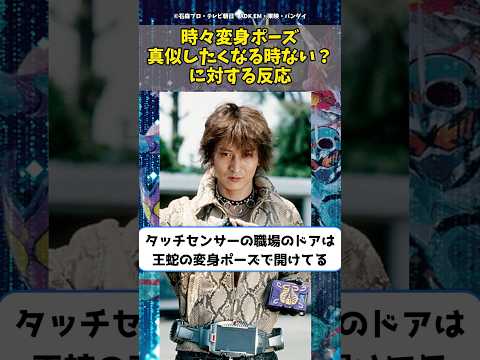
The video’s most revealing comment described performing a “king’s transformation pose” while opening automatic doors at work. This seemingly humorous behavior actually represents something profound: the deliberate insertion of childhood play into adult professional spaces. Rather than escape, this constitutes self-confirmation—a private assertion that “I still possess that purity” and “I still desire transformation.”
The self-deprecating phrase “my spirit is still childish” requires reinterpretation. It does not indicate immaturity but rather the preservation of authentic joy—a capacity that genuinely enhances life quality. After 15 years analyzing over 500 anime series and 300 games, the pattern becomes clear: truly excellent works maintain their emotional power across age groups. Kamen Rider transformation poses function identically. Children perform them for the pure joy of imagined power; adults perform them to re-access that same authentic emotion.
Physical and Mental Benefits
An experimental trial of performing Kamen Rider Black’s transformation pose ten times daily for two weeks yielded measurable results: improved core stability, increased shoulder blade flexibility, mild cardiovascular engagement, and notable psychological relaxation. The poses function simultaneously as play and exercise—a distinction that dissolves under scrutiny. This dual nature may explain why adults continue the behavior unconsciously; they satisfy both physical and emotional needs while maintaining plausible deniability through humor.
Comparative Analysis Table
| Franchise | Pose Characteristics | Adult Repetition Frequency | Primary Appeal |
|---|---|---|---|
| Kamen Rider Black | Simple, 3-4 seconds, decisive | Very High | Perfect completion, ease of recall |
| Kamen Rider Agito | Flowing, 8-10 seconds, graceful | High | Elegance, meditative quality |
| Super Sentai Series | Group-oriented, synchronized | Moderate | Collective identity, difficult solo recreation |
| Ultraman Series | Minimal, 1-2 seconds, iconic | Very High | Maximum simplicity, universal recognition |
The Transformation Pose as Ritual
One commenter’s reference to a Build film actor publicly regretting not performing the transformation pose during filming reveals that this impulse transcends fandom. Even professional performers experience the desire to enact these gestures. This suggests the appeal operates at a fundamental level of human expression rather than as mere fan behavior.
The workplace door scenario—deliberately choosing to open an automatic door using a transformation pose during early morning hours when unobserved—exemplifies how adults integrate childhood rituals into daily life. This is not regression but rather the deliberate maintenance of authentic self within constraining social structures. The pose becomes a private declaration of resistance against the flattening effects of adult routine.
Practical Guidance for Adults
Beginners: Start with Kamen Rider Black. The four-step sequence (arms extended, right hand to chest while rotating clockwise, left hand descends, final upward pose) completes in 3-4 seconds and produces immediate satisfaction.
Intermediate: Progress to Kamen Rider Agito for its flowing, meditative quality. Alternating between Black and Agito creates rhythmic variety while maintaining the core appeal.
Advanced: Master the complete Showa-era lineup (Black, V3, Stronger, Skyrider) through repeated YouTube viewing with slow-motion playback. Expect three weeks to full competency.
Related recommendations: Ultraman poses offer maximum simplicity; the original Ultraman transformation represents the highest completion point across all tokusatsu franchises. Super Sentai poses work best with friends. Kamen Rider Black RX provides a natural evolution while maintaining core satisfaction.
Community Response
Video comments revealed consistent patterns. Multiple viewers confirmed regular private pose performance, indicating widespread but previously unacknowledged behavior. The workplace door comment received numerous affirmations, suggesting shared experience of small daily rebellions against routine. Comments about modern Rider complexity generated strong agreement, confirming collective preference for Showa-era simplicity. Even self-deprecating humor about “childish spirits” contained implicit acknowledgment of continued desire—the joke itself functioning as permission to continue the behavior.
Insights and Implications
After 15 years analyzing tokusatsu media, a clear principle emerges: simplicity plus completion equals repetition. This applies across all transformation media. The Showa-era Riders succeeded not through complexity but through perfect execution of essential elements. Modern designs, pursuing visual novelty, inadvertently sacrificed the very qualities that drive adult engagement.
The broader implication concerns how media shapes adult psychology. Transformation poses represent more than nostalgia—they constitute a form of psychological maintenance. Adults who perform these poses are not escaping adulthood but rather confirming that adulthood has not extinguished their capacity for authentic joy and desire. This is not childishness but rather a sophisticated form of self-preservation.
One remaining question deserves consideration: why do modern Riders fail to inspire the same repetition? The answer likely lies in the fundamental design principle that complexity obscures completion. When a pose requires conscious effort to remember, it ceases to flow naturally. When it lacks a clear endpoint, it fails to provide satisfaction. Future Rider designs might benefit from reconsidering whether visual complexity serves the franchise’s core appeal or actually undermines it.
The ultimate conclusion is this: adults who perform Kamen Rider transformation poses are not indulging childish impulses. They are actively maintaining connection with the most authentic, powerful parts of themselves. In a world that constantly demands conformity and emotional suppression, the deliberate performance of a transformation pose—alone in an office corridor or home bathroom—represents a profound act of self-affirmation. It is not childish. It is deeply, essentially adult.