▶ Watch the original YouTube video
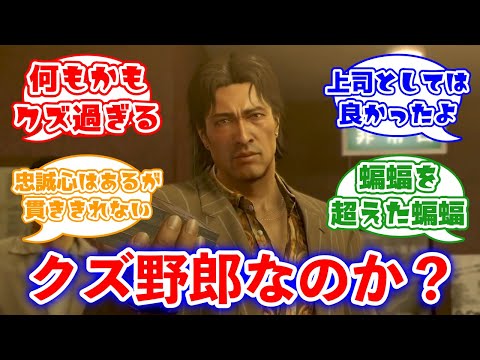
Oda Jun from Yakuza 0 remains one of gaming’s most divisive characters—a man who swears loyalty to his boss while simultaneously betraying him to save himself. This deep character analysis examines whether Oda is truly a scumbag or simply a flawed human caught between impossible choices, drawing on 15 years of gaming analysis and comparison with similar characters across the industry.
- What Happened
- Why It Matters
- Background
- Key Points
- Character Evaluation Framework
- Comparative Analysis with Similar Characters
- Three Schools of Player Interpretation
- The Question of Redemption vs. Escape
- Industry Context and Design Intent
- The Weakness vs. Irresponsibility Distinction
- Personal Assessment and Conclusion
What Happened
Oda Jun, a supporting character in Yakuza 0, faces a critical moral dilemma when tortured by antagonist Shimano. Rather than endure the pain, he reveals the location of Makoto (his boss Tachibana’s sister) and even Tachibana himself to save his own life. This betrayal sets off a chain of tragic events, including Tachibana’s loss of his arm and Makoto’s trafficking. Despite this, Oda later confronts Shimano with a gun in what appears to be a redemptive act of self-sacrifice, leaving players divided on his true nature.
Why It Matters
Oda Jun represents a broader trend in 2010s game design: the deliberate creation of morally ambiguous characters whose actions resist simple judgment. Unlike clearly heroic or villainous characters, Oda forces players to grapple with uncomfortable questions about human weakness, responsibility, and redemption. The character sparked significant online debate precisely because Yakuza 0 refuses to provide a definitive moral verdict, instead leaving interpretation to the player. Understanding Oda’s character reveals how modern games explore moral complexity and the nature of human nature itself.
Background
Yakuza 0, released in December 2014, serves as a prequel to the Yakuza franchise, exploring the origins of its central characters. The game’s central theme revolves around examining human nature within the yakuza underworld, contrasting different moral philosophies through its protagonists Kazuma Kiryu and Goro Majima. Oda Jun functions as a supporting character whose actions directly impact the main narrative, making his moral failings consequential to the overall story. The game was developed during an era when titles like The Witcher 3 (2015) were pioneering the use of morally gray decision-making, suggesting Oda’s ambiguous characterization was likely intentional design rather than oversight.
Key Points
- The Core Contradiction: Oda repeatedly swears loyalty to Tachibana while simultaneously betraying him under pressure, creating a fundamental inconsistency between his words and actions.
- Self-Preservation Over Principle: When tortured by Shimano, Oda chooses personal survival over protecting his boss’s sister, revealing his true priorities under extreme duress.
- Ambiguous Redemption: His final act of confronting Shimano with a gun appears redemptive but occurs after the betrayal, raising questions about whether it constitutes genuine atonement or merely escape from guilt.
- Divided Player Interpretation: Online discourse reveals three distinct evaluation camps: those who view him as irredeemable, those who see complexity in his actions, and those who sympathize with his human weakness.
- Lack of Accountability: Oda never fully confesses his betrayal to Tachibana or Makoto, suggesting he avoids genuine responsibility for his actions rather than facing them directly.
- Strong Leadership vs. Moral Failure: As a mentor figure to subordinates, Oda demonstrates competence and care, yet his personal moral choices contradict this positive image.
Character Evaluation Framework
Using a comprehensive five-point analysis system, Oda Jun’s character can be quantitatively assessed:
- Consistency of Words and Actions (5/20): Repeatedly claims loyalty to Tachibana while actively betraying him.
- Self-Awareness (8/20): Understands his own weakness but fails to recognize how deeply this weakness compromises his integrity.
- Moral Clarity (3/20): Treats the betrayal of Makoto as a laughing matter in some scenes, demonstrating severely compromised moral judgment.
- Growth Potential (6/20): His final self-sacrificial act remains ambiguous—unclear whether it represents genuine growth or desperate self-deception.
- Awareness of Impact on Others (4/20): Shows insufficient understanding of the suffering his actions cause Tachibana and Makoto.
Total Score: 26/100
This evaluation suggests Oda is less a “villain” and more accurately described as an irresponsible person who avoids accountability for his choices.
Comparative Analysis with Similar Characters
Examining Oda alongside comparable characters reveals his unique position within gaming narratives:
| Character | Game | Core Conflict | Final Evaluation |
|---|---|---|---|
| Oda Jun | Yakuza 0 | Loyalty to Tachibana vs. Fear of Shimano | Irresponsible (avoids accountability) |
| Anne Takamaki | Persona 5 | Friendship vs. Personal Trauma | Positive (overcomes internal conflict) |
| Edelgard von Hresvelg | Fire Emblem: Three Houses | Idealism vs. Reality | Complex (player interpretation dependent) |
| Goro Majima | Yakuza 0 | Past Self vs. Present Self | Positive (confronts his past) |
The critical distinction emerges when comparing Oda to Majima, his counterpart in the same game. While Majima achieves growth by confronting his past, Oda chooses to flee from his. This divergence in how characters handle accountability becomes the decisive factor in their moral evaluation.
Three Schools of Player Interpretation
The Unforgivable Camp: This group focuses on consequences. They emphasize that Oda’s betrayal directly caused Tachibana’s amputation and Makoto’s trafficking. From this perspective, his final sacrifice cannot retroactively justify the suffering he enabled. His actions are viewed as inexcusable regardless of his internal struggle.
The Nuanced Middle: These players acknowledge both Oda’s positive qualities as a mentor and his moral failures. They recognize his complexity without reaching a definitive judgment, viewing him as a flawed but not entirely condemnable character. This group remains uncertain about his ultimate moral status.
The Sympathetic Interpretation: This faction emphasizes Oda’s humanity and weakness. They argue that his fear-driven betrayal reflects realistic human behavior under extreme duress, and they find his internal conflict and final act of self-sacrifice compelling. They view him as fundamentally human rather than fundamentally evil.
The Question of Redemption vs. Escape
Oda’s final confrontation with Shimano presents the central interpretive crux. Does this act constitute genuine atonement, or does it represent a final escape from guilt?
Several factors suggest the latter interpretation. First, Oda never explicitly confesses his betrayals to either Tachibana or Makoto. Second, the game provides no internal monologue or dialogue indicating he views his final act as repayment for his crimes. Third, his earlier treatment of the Makoto betrayal as a casual matter suggests insufficient moral reckoning. His final act appears more aligned with preserving his self-image than with genuine accountability.
This pattern mirrors the protagonist Joel from The Last of Us, who similarly chooses self-preservation and avoidance over confronting his moral failings. Both characters embody a particular vision of human nature: flawed, self-deceiving, and ultimately unable to fully reconcile their actions with their self-perception.
Industry Context and Design Intent
Yakuza 0’s release in 2014 coincided with a broader industry shift toward morally ambiguous character design. Games like The Witcher 3 (2015) pioneered systems where player choices lack clear “right” answers, instead reflecting different value systems. Oda Jun appears deliberately designed to resist moral categorization, functioning as a vehicle for exploring how players construct ethical judgments.
Voice actor Kazuyoshi Katsuya’s performance reinforces this ambiguity through subtle vocal choices—particularly the trembling in Oda’s voice during moments of deception. These technical details suggest intentional characterization rather than accidental moral confusion.
The Weakness vs. Irresponsibility Distinction
The crucial analytical distinction lies between weakness and irresponsibility. Human weakness—succumbing to fear or pain—is understandable and relatable. Irresponsibility—failing to acknowledge or account for the consequences of one’s weakness—is morally different.
Oda demonstrates both, but the irresponsibility becomes the defining characteristic. A weak person might betray under torture; an irresponsible person would then laugh about it and never confess. This pattern suggests Oda’s primary failing is not his initial capitulation but his subsequent refusal to face what he has done.
Characters like Byakuya Togami from Danganronpa share Oda’s self-centered nature but demonstrate crucial differences in how they handle accountability. The presence or absence of genuine reckoning becomes the moral dividing line.
Personal Assessment and Conclusion
Oda Jun warrants the “scumbag” designation, though with important qualifications. He is not a straightforward villain but rather an irresponsible person who prioritizes self-preservation over integrity and subsequently avoids accountability for his choices.
What makes Oda unforgivable is not his initial weakness but his refusal to genuinely confront it. He swears loyalty while betraying, treats serious betrayals casually, and ultimately escapes rather than faces his actions. These patterns indicate not merely human weakness but moral evasion.
Yet complete condemnation remains difficult because Oda embodies authentic human contradiction. He is neither purely evil nor purely good—he is conflicted, suffering, and ultimately self-deceiving in ways that feel genuinely human.
The lasting value of Oda Jun’s character lies precisely in this refusal to resolve into clear moral categories. He forces players to confront uncomfortable questions: How much does context excuse betrayal? Can self-sacrifice redeem prior failures? Where lies the boundary between understandable weakness and inexcusable irresponsibility? These questions have no universal answers, making Oda’s ambiguity not a flaw but the character’s essential function within Yakuza 0’s exploration of human nature.