▶ Watch the original YouTube video
After 15 years of following the Kamen Rider franchise, one series stands out for its remarkably human portrayal of antagonists. Kamen Rider Gaim has sparked widespread online discussion about why its villains—particularly characters like Gochizou, Shieta, and Jeep—resonate so deeply with audiences, marking a significant shift in how special effects dramas depict moral complexity.
What Happened
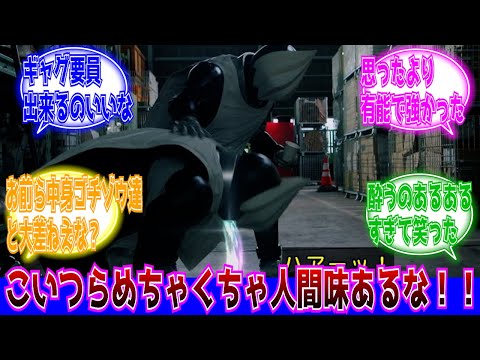
Kamen Rider Gaim has generated substantial fan discussion across social media platforms, with viewers consistently describing the show’s antagonists as surprisingly “human” and relatable. Characters such as Gochizou, Shieta, Jeep, and Whip Soldiers are being praised not as one-dimensional villains, but as complex individuals driven by recognizable human desires and internal conflicts. This response reflects a broader shift in how contemporary audiences engage with character development in the tokusatsu (special effects) genre.
Why It Matters
The reception of Kamen Rider Gaim’s character writing signals an important evolution in the tokusatsu industry. Rather than presenting simple good-versus-evil narratives, the series embraces moral ambiguity and psychological depth—a trend that appeals to younger viewers seeking characters with internal contradictions similar to their own experiences. This approach challenges traditional genre conventions and reflects changing audience expectations for character-driven storytelling in special effects dramas.
Background
The Kamen Rider franchise has evolved significantly since its inception. Over the past 15 years, the series has progressed from Kamen Rider Kiva (2008) through Wizard, Gaim, Drive, and beyond. Each iteration has gradually incorporated more nuanced character development. However, Kamen Rider Gaim represents a notable acceleration of this trend, placing human psychology and conflicting motivations at the center of its narrative structure rather than treating antagonists as mere obstacles for the protagonist to overcome.
The shift reflects broader industry trends in anime and tokusatsu production. Since 2015, there has been a marked movement away from binary morality frameworks toward complex, multi-perspective storytelling. This change appears intentional, suggesting that production teams recognize that audiences—particularly those aged 15 to 30—seek characters whose internal struggles mirror contemporary social realities.
Key Points
- Gochizou’s Contradictions: The character embodies the simultaneous desire for power and vulnerability when that desire goes unfulfilled, creating genuine empathy rather than simple antagonism.
- Shieta’s Complexity: Rather than functioning as a simple subordinate, she pursues independent goals and exhibits emotional depth that transcends her hierarchical position.
- Hierarchical Conflict: The relationship between Jeep and other characters explores personal struggles within rigid power structures, adding psychological realism to their interactions.
- Form Evolution as Psychology: New and intermediate forms represent psychological transformation rather than mere power increases, linking physical upgrades to internal character development.
- Departure from Traditional Villainy: Unlike previous Kamen Rider series, Gaim’s antagonists are fundamentally human rather than supernatural entities, enabling direct audience identification.
- Industry Trend Alignment: The series exemplifies a broader shift from binary morality toward gray-zone character portrayal across contemporary tokusatsu and anime productions.
Comparative Analysis
When examined alongside previous Kamen Rider entries, Kamen Rider Gaim’s approach becomes distinctly clear. Kamen Rider Wizard presented antagonists as supernatural creatures driven by explicit malice, offering minimal opportunity for audience empathy. Kamen Rider Drive featured artificial intelligences attempting to understand humanity, creating moderate emotional engagement. By contrast, Kamen Rider Gaim positions human characters with recognizable desires—ambition, security, autonomy—at the narrative center, fundamentally altering viewer psychology.
The character Gochizou differs significantly from Kamen Rider Gaim’s Sengoku Ryoma, who functioned as an intellectually superior antagonist. Gochizou instead represents an ordinary person pursuing power, making him psychologically accessible to average viewers who recognize similar impulses within themselves.
Perspectives
Online responses reveal a generational divide in how audiences interpret Kamen Rider Gaim. Younger viewers and those accustomed to complex narrative structures celebrate the series’ moral ambiguity, with comments frequently noting that “Gochizou is surprisingly human,” “Shieta’s internal conflict feels real,” and “Jeep’s frustration with hierarchy is understandable.” These responses indicate that audiences actively analyze character motivation and internal psychology.
Conversely, some traditional fans express concern that empathizing with antagonists contradicts the franchise’s foundational values. This segment argues that Kamen Rider should maintain clear moral messaging and straightforward heroic narratives. YouTube comments reveal more analytical perspectives, with viewers connecting character psychology to contemporary social structures—particularly regarding power dynamics, class consciousness, and individual agency within hierarchical systems.
This divergence suggests that the Kamen Rider audience has bifurcated into those prioritizing traditional moral clarity and those seeking sophisticated psychological portrayal.
Insights
Kamen Rider Gaim represents a significant inflection point in tokusatsu storytelling. By centering human psychology rather than supernatural conflict, the series demonstrates that special effects dramas can achieve emotional depth through character complexity rather than spectacle alone. The widespread positive response to its antagonists suggests that contemporary audiences—particularly younger demographics—prioritize internal consistency and psychological realism over moral simplicity.
The series raises important questions about character development in genre entertainment. If antagonists become too sympathetic, does this undermine moral education? Conversely, if characters remain one-dimensional, do they fail to engage sophisticated audiences? Kamen Rider Gaim appears to navigate this tension by maintaining character agency and motivation while preserving narrative stakes.
The production team’s apparent recognition that younger viewers seek characters mirroring their own internal contradictions reflects broader entertainment industry evolution. As audiences mature and diversify, the demand for nuanced characterization increases. Kamen Rider Gaim’s success in this regard may establish a template for future tokusatsu productions, suggesting that the genre’s future lies in psychological depth rather than purely action-driven narratives.
Ultimately, Kamen Rider Gaim may represent a milestone in tokusatsu evolution—the moment when character psychology became as important as transformation sequences, and when audiences began evaluating antagonists not as obstacles but as fully realized human beings with comprehensible motivations.