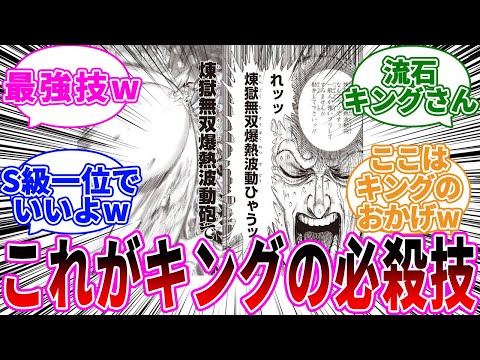
▶ Watch the original YouTube video
King from One Punch Man represents one of anime’s most subversive character designs: a hero universally recognized as the strongest fighter, despite possessing no actual combat abilities. His “ultimate technique” is doing nothing—yet it works perfectly, embodying the series’ central theme of expectation versus reality.
- What Happened
- Why It Matters
- Background
- Key Points
- The Nature of King’s “Ultimate Technique”
- Thematic Significance: Expectation and Reality
- Comparative Analysis: King Among Anime Characters
- Fan Reception and Internet Response
- Psychological Dimensions: Imposter Syndrome Inverted
- The Broader Narrative Function
- Evolution and Future Implications
- Insights: What King Reveals About Anime and Audience Expectations
What Happened
King, a supporting character in One Punch Man, has become a fan favorite precisely because his legendary status is built entirely on misunderstanding and coincidence. While other characters attribute his victories to devastating techniques and superhuman strength, the reality is far different: King is weak, possesses no special abilities, and often has nothing to do with the monsters he’s credited with defeating. His mere presence, however, terrifies opponents into submission—not because of any genuine power, but because of the psychological weight of his undeserved reputation.
Why It Matters
King’s character design represents a fundamental departure from anime convention. In 2015, when One Punch Man premiered, the industry was dominated by ability-based battle narratives where power came from special techniques, inherited talents, or destined abilities. King demolishes this formula by being the strongest character precisely because he has none of these things. His existence forces viewers to question what “strength” actually means and challenges the fundamental assumptions underlying most anime storytelling. This subversive approach has influenced subsequent anime productions and resonates deeply with audiences experiencing their own gaps between perceived and actual competence.
Background
One Punch Man, which debuted as a web manga before receiving a television anime adaptation in 2015, centers on Saitama, an ordinary man who became unbeatable through consistent training rather than supernatural gifts. The series fundamentally rejects the “chosen one” narrative prevalent in anime. King functions as the perfect complement to this theme. Throughout the series, King’s reputation grows despite his complete lack of combat prowess. Monsters he supposedly defeated were actually defeated by Saitama or fell victim to random chance. Yet because King happened to be present at these moments, he receives full credit. His internal anxiety about being exposed as a fraud contrasts sharply with his external image as an invincible warrior, creating a psychological depth rarely seen in supporting characters.
Key Points
- King possesses no special abilities, weapons, or combat training, yet is universally regarded as the strongest fighter in the series
- His “ultimate technique” consists of doing nothing—opponents flee in terror based purely on his reputation and psychological presence
- The contradiction between King’s actual weakness and perceived invincibility mirrors the series’ central theme of expectation versus reality
- King’s character design directly challenges the ability-based power systems that dominated anime in 2015, representing a “post-ability” narrative approach
- His internal struggle with imposter syndrome—knowing he’s weak while being treated as the strongest—adds psychological realism to his character
- King serves as a narrative mirror that highlights Saitama’s genuine strength while simultaneously questioning what strength truly means
The Nature of King’s “Ultimate Technique”
Analyzing King’s combat effectiveness reveals a fundamental paradox. When examined closely, every instance of King’s supposed victory falls into one of three categories: he does nothing and the opponent flees in fear; the actual defeat was caused by Saitama or random circumstance; or King attempts something that has no actual effect. This is distinctly different from other anime characters who overcome limitations through creativity or willpower. King doesn’t overcome anything—he simply exists, and that existence carries enough psychological weight to determine outcomes.
This stands in sharp contrast to characters like Mirio Togata from My Hero Academia, who loses his powers but compensates through tactical innovation and self-awareness. King, conversely, remains unaware of his own powerlessness while simultaneously knowing he’s weak. This dual consciousness creates a unique psychological profile: he experiences what psychologists call “imposter syndrome in reverse.” Rather than feeling like a fraud despite genuine competence, King is genuinely incompetent yet universally perceived as supremely capable.
Thematic Significance: Expectation and Reality
One Punch Man’s entire narrative framework rests on subverting audience expectations. Saitama, despite being the strongest character, is presented as ordinary and bored. He lacks the dramatic origin story, special bloodline, or cosmic destiny that typically define anime protagonists. King extends this deconstruction further. He is the inverse of the typical “hidden strength” character archetype—instead of being secretly powerful, he is secretly powerless.
This thematic approach emerged in 2015 as a deliberate counter-movement to the ability-focused anime landscape. Series like Attack on Titan, JoJo’s Bizarre Adventure Part 4, and My Hero Academia all centered narrative tension around special powers and their strategic deployment. One Punch Man rejected this entirely, suggesting that true strength might come from mundane sources (consistent training) or might not matter at all (Saitama’s boredom despite invincibility). King takes this further by suggesting that strength itself might be purely a matter of perception.
Comparative Analysis: King Among Anime Characters
| Character | Series | Source of Strength | Self-Perception | External Perception |
|---|---|---|---|---|
| King | One Punch Man | Misunderstanding and chance | Weak | Strongest |
| Saitama | One Punch Man | Consistent training | Ordinary | Strongest |
| Levi Ackerman | Attack on Titan | Training and innate talent | Strong | Strong |
| Raku Ichijo | Nisekoi | Intentional performance | Ordinary | Negative |
This comparison reveals King’s unique narrative position. He is the only character whose self-perception and external perception are completely inverted. This positioning is extraordinarily rare in anime, making King a genuinely distinctive character archetype.
Fan Reception and Internet Response
Since One Punch Man’s broadcast, King has generated substantial fan engagement across multiple platforms. On Twitter, users frequently post observations like “King’s ultimate technique is doing nothing,” accurately identifying the character’s core contradiction. These posts consistently receive high engagement, suggesting broad audience recognition of King’s thematic significance.
YouTube comments reveal more analytical responses, with viewers noting that King’s characterization fundamentally challenges anime industry conventions. Discussion threads on forums like 4chan’s anime boards contain sophisticated analysis treating King’s existence as a deliberate subversion of viewer expectations—a meta-narrative device rather than a simple comedic character.
This varied reception indicates that audiences understand King operates on multiple levels simultaneously: as comic relief, as thematic commentary, and as psychological character study. The character resonates because he embodies a universal human experience—the gap between how others perceive us and how we perceive ourselves.
Psychological Dimensions: Imposter Syndrome Inverted
King’s internal experience mirrors a psychological phenomenon known as imposter syndrome, but inverted. Traditional imposter syndrome involves feeling fraudulent despite genuine competence. King experiences the opposite: he possesses genuine incompetence while being treated as supremely competent. This creates constant anxiety about exposure, driving much of his character development.
His behavior throughout the series reflects this psychological state. King constantly worries about maintaining his facade, experiences stress in situations where his lack of ability might become apparent, and develops genuine friendships (particularly with Saitama) that provide emotional relief from the burden of his false reputation. This psychological realism elevates King beyond simple comic relief into a character with genuine emotional depth.
The Broader Narrative Function
Within One Punch Man’s structure, King serves multiple narrative purposes simultaneously. He functions as a mirror reflecting Saitama’s genuine strength by contrast. He embodies the series’ central theme of expectation versus reality. He represents a challenge to anime industry conventions about power systems and character strength. Most importantly, he provides psychological grounding to the series’ exploration of what strength actually means.
Saitama’s strength comes from training but leaves him emotionally unfulfilled. King’s perceived strength comes from chance but leaves him psychologically burdened. Neither character experiences the satisfaction typically associated with power in anime narratives. This parallel structure suggests that One Punch Man questions whether strength—however obtained—provides meaningful fulfillment.
Evolution and Future Implications
King’s character arc suggests potential for significant development. The most compelling narrative direction would involve King recognizing that his psychological impact—his ability to inspire fear and respect through presence alone—constitutes a genuine form of strength, even if unconventional. This would represent his transition from unconscious fraud to conscious acceptance of his unique power.
Such development would complete King’s thematic journey: from unwitting embodiment of expectation-versus-reality to conscious participant in redefining what strength means. This would align with One Punch Man’s broader project of deconstructing anime power fantasy conventions.
Insights: What King Reveals About Anime and Audience Expectations
King’s popularity and the sophisticated fan analysis surrounding him reveal important truths about contemporary anime audiences. Viewers are increasingly aware of and interested in subverting genre conventions. They recognize and appreciate characters that challenge rather than fulfill typical power fantasy narratives. King succeeds precisely because he fails to be what audiences expect a “strongest character” to be.
The character also demonstrates that psychological realism and emotional authenticity resonate more powerfully than surface-level power displays. King’s anxiety about exposure, his genuine friendships, and his internal conflict generate more engagement than any special technique could. This suggests a shift in what audiences value: not spectacular abilities, but honest character portrayal.
Furthermore, King’s existence as a narrative device reveals how thoroughly One Punch Man deconstructs anime conventions. By creating a character who is strongest precisely because he has no strength, the series forces viewers to question fundamental assumptions about power, worth, and identity. King becomes a philosophical statement embedded in character design—a living argument that perception shapes reality more profoundly than objective capability.
For viewers encountering One Punch Man, King represents an invitation to think critically about the stories they consume and the assumptions those stories encode. His “ultimate technique” of doing nothing accomplishes more narratively than any spectacular power display, suggesting that sometimes the most subversive choice is the most honest one.