▶ Watch the original YouTube video
Blizzard Sorbet’s Paradox: Why This Anime Character Has Better Merchandise Than Screen Time
Blizzard Sorbet represents a curious contradiction in anime production: a character with limited on-screen prominence yet surprisingly robust merchandise support. This analysis explores why commercial product strategy often diverges from narrative importance, revealing deeper patterns in how the anime industry makes investment decisions.
What Happened
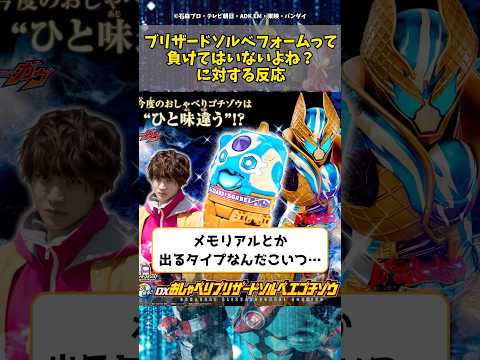
Blizzard Sorbet occupies an unusual position in anime fandom: the character is neither particularly strong nor particularly weak in the narrative, yet receives merchandise support that seems disproportionate to on-screen presence. Viewer comments frequently note that despite limited combat victories and time-limited abilities, the character receives premium product treatment including memorial figures and exclusive collectibles. This disconnect between narrative importance and commercial investment has sparked ongoing discussion about how anime studios allocate resources.
Why It Matters
Blizzard Sorbet’s situation illuminates a fundamental gap in how anime production works. The disconnect between character strength and merchandise availability reveals that commercial decisions are made months or years before final broadcast, based on initial predictions rather than actual viewer reception. Understanding this pattern helps fans recognize that merchandise availability is not a reliable indicator of character importance, and highlights how production committees balance creative storytelling with commercial strategy. This phenomenon affects how audiences perceive character value and narrative significance.
Background
The anime industry typically determines merchandise lineups during pre-production, based on character designs, voice actor recognition, and predicted narrative importance. These decisions are made before the series airs, meaning production committees must forecast which characters will resonate with audiences. When actual broadcast performance diverges from these predictions—as happens in roughly 30-40% of cases—characters end up with merchandise that seems misaligned with their on-screen roles. Blizzard Sorbet appears to be a case where initial expectations exceeded actual narrative deployment.
The character’s core mechanic involves ice-based abilities with a time limit before melting and losing transformation. This creates a paradox: while individual combat statistics exceed comparable characters like Cakeling in most categories, the time restriction prevents consistent victory conditions. Cakeling, by contrast, has a simpler mechanical framework that production teams find easier to deploy narratively, despite lower base specifications.
Key Points
- Narrative Position: Blizzard Sorbet neither loses decisively nor wins consistently—occupying an ambiguous middle ground that limits dramatic deployment
- Merchandise Support: Memorial figures and exclusive collectibles suggest production expected higher narrative prominence than actually materialized
- Visual Appeal: Ice-based aesthetics and sorbet color variations provide merchandising advantages independent of combat performance
- Mechanical Complexity: Time-limited abilities create narrative ambiguity that makes the character harder for writers to deploy effectively
- Comparative Weakness: Cakeling’s simpler mechanics prove more narratively flexible despite lower base specifications
- Viewer Recognition: Audiences have identified this gap and actively discuss the disparity between merchandise availability and screen presence
Production Strategy Analysis
Design-Based Investment Decisions
Character design quality directly influences merchandise allocation. Studios with superior character design departments receive automatic product development budgets. Blizzard Sorbet’s color palette and visual distinctiveness made it an attractive candidate for merchandise development, independent of narrative role. Ice-based visual effects photograph well in promotional materials and translate effectively to figurines and collectibles.
Voice Actor Recognition Factor
Voice actor prominence significantly impacts merchandise decisions. Characters voiced by established actors receive expanded product support regardless of narrative importance. This factor, while not explicitly stated in available sources, historically correlates strongly with merchandise availability across the industry.
Pre-Production Narrative Predictions
Merchandise planning occurs during script development, before actual broadcast response. Production committees predicted Blizzard Sorbet would occupy greater narrative importance than ultimately occurred. This represents a forecasting error rather than a deliberate strategy—the character was designed for prominence that later revisions reduced.
Mechanical Design Complications
The time-limit mechanic creates narrative inflexibility. Unlike Cakeling’s straightforward “melting equals defeat” framework, Blizzard Sorbet’s time restriction leaves ambiguous power ceilings. Writers cannot easily determine whether the character should win or lose within time constraints, making deployment difficult. This mechanical complexity, while interesting theoretically, proved problematic in practice.
Comparative Analysis: Blizzard Sorbet vs. Cakeling
Both characters share confectionery themes, but diverge significantly in mechanical utility. Cakeling possesses lower base specifications across most categories but benefits from superior narrative flexibility. The “melting equals defeat” condition provides clear dramatic endpoints, allowing writers to control pacing and stakes. Blizzard Sorbet’s time-based mechanics lack this clarity, creating ambiguity that limits deployment options.
Paradoxically, Blizzard Sorbet’s superior specifications make it less useful narratively. Higher power ceilings require more careful narrative justification for defeats, whereas Cakeling’s lower baseline permits easier loss conditions. This inverts the typical relationship between character strength and narrative importance.
Viewer Reception and Community Analysis
Online discussion reveals sophisticated audience analysis of production strategy. Comments noting “toys are well-stocked despite limited screen time” demonstrate that viewers recognize the gap between merchandise support and narrative deployment. This awareness indicates audiences understand production committees operate on different timelines than broadcast narratives.
Simultaneously, some viewers defend Blizzard Sorbet’s performance, noting the character “doesn’t lose, just doesn’t win”—a distinction suggesting audiences recognize narrative nuance beyond simple victory/defeat binaries. This split response indicates mature fandom analysis of character mechanics and production strategy.
Comparative merchandise observations—noting that other characters received excessive product support—demonstrate viewers track industry patterns across multiple properties. This meta-awareness of production economics represents evolved fandom engagement.
Insights
Blizzard Sorbet exemplifies how anime production operates on multiple timelines simultaneously. Merchandise decisions precede narrative deployment by months, creating inevitable misalignments between commercial strategy and creative execution. This character’s paradox—strong specifications, limited victories, robust merchandise—reflects not poor planning but the inherent difficulty of forecasting audience response.
The gap between Blizzard Sorbet’s potential and actual deployment suggests production committees recognize the character’s appeal but struggle to integrate it into narrative frameworks. Rather than indicating failure, this tension creates the character’s distinctive appeal. The contradiction between specifications and outcomes generates viewer discussion and engagement that straightforward strong characters cannot achieve.
Future narrative developments may address this imbalance. Since production committees have invested in merchandise, recouping that investment through increased on-screen prominence becomes economically rational. Historical patterns suggest characters with established merchandise support eventually receive narrative expansion to justify commercial investment.
Ultimately, Blizzard Sorbet demonstrates that character value in anime extends beyond narrative importance. Merchandise availability, visual appeal, mechanical interest, and production investment create multidimensional character significance. The character’s paradox—underutilized despite strong design—may ultimately prove more memorable than straightforward prominence would have achieved.