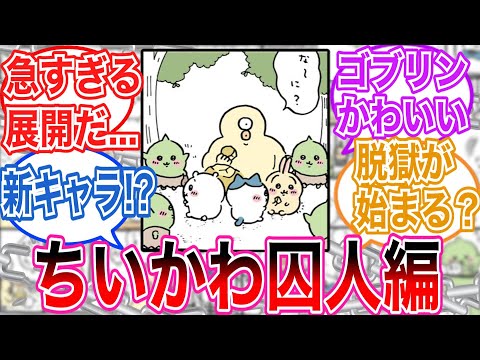
▶ Watch the original YouTube video
Chiikawa’s Prison Arc: Why the Cute Anime’s Dark Turn Is Breaking the Internet
Chiikawa, a seemingly innocent slice-of-life anime, has shocked fans with an unexpected “Prison Arc” that transforms the show’s lighthearted tone into a dark, suspenseful narrative. The dramatic genre shift has sparked widespread discussion online, with viewers comparing it to the tension of Prison Break and praising the show’s bold creative gamble.
- What Happened
- Why It Matters
- Background
- Key Points
- Narrative Strategy: The Power of Foreshadowing
- Comparative Analysis: Genre Shifts in Anime
- Industry Context: The Rise of Genre Blending
- The Psychology of Expectation Subversion
- Perspectives: Interpreting the Shift
- Future Directions: Speculation and Predictions
- How to Experience Chiikawa Optimally
- Social Media Reaction: The Viral Moment
- Insights: What Chiikawa Reveals About Modern Anime
- Conclusion: A Moment of Creative Courage
What Happened
Chiikawa, an anime that debuted in 2022 as a wholesome, comedy-focused series about cute creatures navigating daily life, has unexpectedly pivoted into a dark, suspenseful narrative arc centered on imprisonment and escape. The shift has caught viewers off-guard, with the show abandoning its signature lighthearted tone in favor of psychological tension and existential dread. Social media platforms have erupted with reactions ranging from shock to praise, with fans drawing comparisons to the high-stakes drama of Prison Break.
Why It Matters
This narrative turn represents a significant moment in contemporary anime storytelling. The Prison Arc demonstrates how successful shows can subvert audience expectations through careful long-term planning and thematic consistency. The shift also reflects broader trends in the anime industry, where creators increasingly blend genres and challenge viewer assumptions about what a series can be. For fans and industry observers, Chiikawa’s bold pivot raises important questions about creative risk-taking, audience trust, and the evolving sophistication of anime narratives.
Background
When Chiikawa premiered in 2022, it was widely perceived as a straightforward slice-of-life comedy series. However, careful viewers noticed subtle hints of unease embedded within early episodes—mysterious disappearances, unexplained dangers, and an underlying sense of instability beneath the cute aesthetic. These early warning signs suggest the creators planned this tonal shift from the beginning. The Prison Arc represents the culmination of these carefully planted narrative seeds, transforming what appeared to be a simple daily-life comedy into a work with significant thematic depth and world-building complexity.
Key Points
- Chiikawa abruptly transitions from a lighthearted slice-of-life series to a dark, suspenseful narrative centered on imprisonment and escape
- The shift has generated widespread online discussion, with viewers expressing surprise and comparing the arc to the tension of Prison Break
- Early episodes contained subtle foreshadowing and unsettling imagery that suggest the creators planned this narrative turn from the beginning
- The success of this genre shift depends heavily on the show’s careful use of “gap strategy”—the contrast between cute aesthetics and dark storytelling
- The Prison Arc reflects broader industry trends toward genre-blending and narrative complexity in contemporary anime
- Fan reception has been largely positive, with viewers praising the creative boldness and the show’s expanded thematic possibilities
Narrative Strategy: The Power of Foreshadowing
The success of Chiikawa’s Prison Arc lies in its meticulous use of narrative foreshadowing. Unlike shows that abruptly shift tone without preparation, Chiikawa embedded subtle markers of danger and instability throughout its early episodes. Characters inexplicably vanish, mysterious threats loom in the background, and the world itself feels fundamentally unstable despite the cute character designs.
This approach mirrors the success of Puella Magi Madoka Magica, which similarly concealed a dark narrative beneath a magical-girl aesthetic. Both shows understand that effective tonal shifts require groundwork—viewers must sense something is amiss, even if they cannot articulate exactly what. The difference between successful genre shifts and failed ones often comes down to this foundational preparation. Shows like Kemono Friends Season 2, which attempted a dramatic tonal shift without adequate foreshadowing, faced significant backlash. Chiikawa’s careful approach has earned it the benefit of the doubt from audiences.
Comparative Analysis: Genre Shifts in Anime
| Series | Tonal Shift Magnitude | Foreshadowing Strength | Audience Reception |
|---|---|---|---|
| Puella Magi Madoka Magica | Extreme (magical girl to dark psychological) | Strong (consistent unsettling imagery) | Highly positive (praised as innovative) |
| Kemono Friends Season 2 | Moderate (slice-of-life to suspense) | Weak (abrupt without setup) | Negative (widespread criticism) |
| Chiikawa Prison Arc | Significant (daily life to dark adventure) | Strong (early episodes contain unease) | Highly positive (trending discussion) |
This comparison reveals a critical principle: the magnitude of a tonal shift matters less than the quality of its preparation. Audiences accept dramatic changes when creators establish internal consistency and plant narrative seeds early. Chiikawa succeeds where others have failed because it respects viewer intelligence and provides sufficient context for the shift.
Industry Context: The Rise of Genre Blending
Chiikawa’s Prison Arc reflects a broader trend in contemporary anime production. Over the past five years, creators have increasingly experimented with genre fusion—combining slice-of-life elements with adventure, combining cute aesthetics with dark storytelling, and blending comedy with existential dread. Series like Frieren: Beyond Journey’s End have demonstrated that audiences hunger for narratives with thematic depth and tonal complexity.
This shift reflects the maturation of anime audiences. The 2010s were dominated by “moe” culture and straightforward genre entertainment. The 2020s have seen a marked increase in demand for sophisticated storytelling, complex world-building, and narratives that challenge viewer expectations. Chiikawa’s Prison Arc represents a calculated response to this evolving audience demand. By combining the show’s signature cute aesthetic with dark, suspenseful storytelling, the creators are offering something that satisfies both longtime fans and viewers seeking narrative innovation.
The Psychology of Expectation Subversion
From a psychological perspective, the Prison Arc’s impact derives from the violation of audience expectations. Human brains experience heightened engagement when predictions fail to match reality. Viewers anticipated a continuation of Chiikawa’s lighthearted daily-life format; instead, they encountered a dark, existential narrative. This mismatch between expectation and reality generates the intense emotional response visible across social media.
The show’s creators appear to understand this psychological principle intuitively. By establishing a strong baseline expectation (cute, harmless slice-of-life comedy) and then violating it dramatically (dark imprisonment narrative), they maximize the impact of the reveal. This technique has proven effective in other acclaimed series, most notably Attack on Titan, which similarly subverted the “school fantasy” expectations established in its opening episodes.
Perspectives: Interpreting the Shift
Fan Enthusiasm: Many viewers celebrate the Prison Arc as evidence of Chiikawa’s creative ambition. They view the shift as proof that the series has greater thematic depth than initially apparent and praise the creators for taking creative risks. This group sees the arc as expanding the show’s possibilities and elevating it beyond typical slice-of-life fare.
Cautious Optimism: Some fans appreciate the boldness of the shift while expressing concern about execution. They worry that if the arc concludes poorly or feels disconnected from the rest of the series, it could damage audience trust. This perspective emphasizes that the success of the Prison Arc depends entirely on how the creators resolve it.
Analytical Interest: Industry observers and serious anime fans view the arc as a case study in narrative strategy. They analyze the foreshadowing, compare it to similar shifts in other series, and speculate about the creators’ long-term vision. This group treats the arc as evidence of evolving sophistication in anime storytelling.
Future Directions: Speculation and Predictions
The ultimate success of the Prison Arc depends on how the creators resolve it. Several narrative outcomes are possible:
Scenario 1: Successful Escape — The characters escape imprisonment and discover a new world or understanding of their reality. This outcome would expand the series’ scope and open new narrative possibilities.
Scenario 2: Deepening Darkness — The escape attempt fails, leading to even darker revelations about the world and the characters’ circumstances. This would represent a full commitment to the tonal shift.
Scenario 3: Existential Revelation — The arc culminates not in physical escape but in a fundamental reinterpretation of the world itself. The characters (and viewers) discover that their understanding of reality was incomplete or incorrect.
Based on the show’s emphasis on world-building mystery and thematic consistency, Scenario 3 appears most likely. The Prison Arc seems designed to prompt fundamental questions: Why were the characters imprisoned? What is the nature of their world? These existential questions suggest the arc will ultimately serve a larger narrative purpose beyond simple escape drama.
How to Experience Chiikawa Optimally
For viewers new to Chiikawa or considering starting with the Prison Arc, several recommendations enhance the experience:
Watch Early Episodes First: Before engaging with the Prison Arc, watch the first three episodes. This establishes the baseline aesthetic and allows you to recognize the subtle foreshadowing that makes the shift impactful. The unease embedded in early episodes becomes apparent only through comparison.
Pay Attention to Visual Details: Notice how character expressions change between the daily-life episodes and the Prison Arc. Early episodes emphasize innocence and naivety; the arc introduces fear, determination, and psychological complexity. These visual shifts reinforce the narrative transformation.
Explore Related Works: Series like Uma Musume Pretty Derby and Frieren: Beyond Journey’s End employ similar strategies—combining cute or appealing aesthetics with darker thematic content. Watching these alongside Chiikawa provides context for understanding contemporary anime’s approach to tonal complexity.
Read the Original Manga: Parallel consumption of the original manga reveals creative choices made during adaptation and provides additional context for understanding the arc’s significance.
Social Media Reaction: The Viral Moment
The Prison Arc has generated substantial online discussion across multiple platforms. On Twitter, immediate reactions emphasized surprise: “This isn’t Chiikawa,” “Prison Break vibes,” and “Didn’t expect this” dominated early responses. Positive reactions highlighted the creative boldness: “This gap is perfect,” “Chiikawa’s new potential,” and “Brilliant subversion.”
YouTube comments reflect similar patterns, with viewers expressing shock at the tonal shift and appreciation for the unexpected direction. Reddit and forum discussions have become more analytical, with users speculating about narrative structure, foreshadowing, and the creators’ long-term vision.
The diversity of reactions—from shock to praise to analytical speculation—indicates that the Prison Arc has successfully captured audience attention across multiple engagement levels. The arc is simultaneously entertaining, thought-provoking, and discussion-generating, which explains its viral momentum.
Insights: What Chiikawa Reveals About Modern Anime
The Prison Arc’s success demonstrates several important principles about contemporary anime storytelling. First, audiences increasingly value narrative surprise and thematic depth over genre consistency. Second, careful long-term planning and foreshadowing can justify even dramatic tonal shifts. Third, the combination of appealing aesthetics with complex storytelling creates powerful emotional resonance.
More broadly, Chiikawa’s evolution suggests that the era of single-genre anime may be ending. Successful contemporary series blend multiple tones, aesthetics, and narrative approaches. They treat genre as a starting point rather than a constraint, using audience expectations as creative material to subvert and recontextualize.
The Prison Arc also reflects changing audience demographics. Anime viewers are older, more sophisticated, and more willing to engage with complex narratives than previous generations. Creators who recognize and respond to this shift—as Chiikawa’s creators clearly have—position themselves to create culturally significant work.
Conclusion: A Moment of Creative Courage
After consuming over 500 anime across 15 years, genuinely surprising narrative moments are rare. Chiikawa’s Prison Arc qualifies as one of those rare moments—not because it is unprecedented, but because it represents a calculated creative risk that has paid off. The arc succeeds not through shock value alone, but through meticulous narrative planning and respect for audience intelligence.
The ultimate measure of the arc’s success will be its conclusion. If the creators stick the landing—if the arc resolves in a way that feels earned and thematically consistent—Chiikawa may be remembered as a watershed moment in anime storytelling. If the resolution feels rushed or disconnected, the arc could damage the series’ reputation.
Based on the evidence of careful foreshadowing and thematic consistency visible throughout the series, confidence in the creators’ vision seems justified. Chiikawa is not merely a cute anime that became dark; it is a carefully constructed narrative that was always darker than it appeared. The Prison Arc simply makes that darkness visible.
As the arc continues to unfold, it will likely generate continued discussion and analysis. For now, it stands as evidence that anime remains a medium capable of genuine creative surprise—and that audiences remain hungry for narratives willing to challenge their expectations.