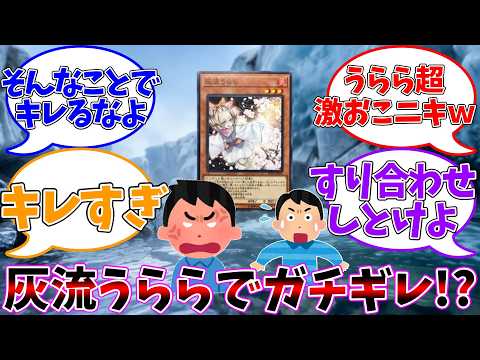
▶ Watch the original YouTube video
Why Yu-Gi-Oh Casual Dueling Turned Confrontational: Understanding Hand Traps and Expectations
A casual Yu-Gi-Oh duel escalated into conflict when one player used Ash Blossom & Joyous Spring, a powerful hand trap card, against an opponent expecting a nostalgic, low-power matchup. The incident reveals a fundamental disconnect in how the community defines “casual” play and highlights the need for clearer communication before matches begin.
What Happened
In a casual Yu-Gi-Oh duel at a card shop, a player using a nostalgic, older-themed deck became visibly upset when their opponent deployed Ash Blossom & Joyous Spring, a hand trap card that negates key plays. The frustrated player loudly abandoned the match and later attempted to publicly identify their opponent on social media, claiming the use of hand traps in a casual setting was unfair.
The incident sparked significant online discussion, with most commenters criticizing the upset player’s behavior as unprofessional. However, a secondary conversation emerged: whether players should confirm deck composition—particularly the presence of hand traps—before casual matches begin.
Why It Matters
This incident exposes a structural problem within the Yu-Gi-Oh community: the term “casual” has no official definition, leaving room for vastly different expectations between players. As the game has evolved with accelerating power creep, hand traps have become essential to competitive viability. Yet many players still associate casual play with older, simpler formats where such cards were unnecessary.
The conflict also reflects broader questions about community standards, player communication, and how trading card games should balance accessibility with competitive integrity. Understanding these dynamics is crucial for maintaining a healthy, inclusive gaming environment.
Background
Yu-Gi-Oh has undergone dramatic changes since 2009. When the game first gained widespread casual popularity, decks required minimal optimization and special summoning was limited. By 2015–2016, universal hand trap cards like Ash Blossom & Joyous Spring became standard in competitive play, fundamentally shifting the game’s pace and strategy.
A turning point came in 2023 with the release of the Tactical Tri-Deck, an official beginner-friendly product that included Ash Blossom & Joyous Spring as standard components. This decision by the game’s creators signaled that hand traps are now considered essential even for casual players, effectively redefining what “casual” means in modern Yu-Gi-Oh.
The author of the original analysis draws on 15 years of personal experience in the Yu-Gi-Oh community, including a similar incident in 2016 when removing hand traps from a casual duel rendered the game unplayable—one player achieved complete board control while the opponent had no meaningful options.
Key Points
- The upset player expected a low-power nostalgic duel but faced a modern deck equipped with hand traps, creating a mismatch in expectations.
- Online consensus strongly criticized the player’s emotional response and public shaming attempt, though some acknowledged the validity of their disappointment.
- The official Tactical Tri-Deck includes hand traps as standard, indicating the game’s creators no longer consider casual play synonymous with “no hand traps.”
- Without pre-match communication about deck composition, such conflicts are predictable and preventable.
- Other card games like Magic: The Gathering and Pokémon TCG have clearer format definitions that reduce similar disputes.
- Modern Yu-Gi-Oh’s power creep makes hand traps functionally necessary for games to remain competitive and meaningful.
Timeline
- 2009: Author begins playing Yu-Gi-Oh; casual scene is small and power levels are modest.
- 2015–2016: Universal hand trap cards become standard in competitive play; author experiences a casual duel where removing hand traps makes the game unplayable.
- 2023: Tactical Tri-Deck releases with hand traps included, signaling official recognition that hand traps are essential even for beginners.
- Recent: Casual duel incident occurs; online discussion highlights the need for clearer communication and format definitions.
Perspectives
The Majority View: The upset player’s behavior was unacceptable. Emotional outbursts and public shaming have no place in casual gaming. Adults should handle disappointment maturely and communicate concerns respectfully.
The Sympathetic View: The upset player’s disappointment is understandable. They expected a nostalgic, low-power duel and instead faced a modern deck with powerful negation tools. The other player should have confirmed deck composition beforehand, especially when the opponent explicitly mentioned wanting to play with older themes.
The Structural View: The real problem is that Yu-Gi-Oh lacks official casual format definitions. Magic: The Gathering avoids similar disputes by offering multiple clearly defined formats (Kitchen Table, EDH, etc.). Pokémon TCG similarly maintains explicit format guidelines. Yu-Gi-Oh’s absence of such clarity creates predictable conflicts.
The Game Design View: Modern Yu-Gi-Oh’s power creep has made hand traps functionally necessary. Without them, first-player advantage becomes overwhelming, and second-player options become meaningless. The game design itself demands their inclusion for balance.
Insights
This incident reflects Yu-Gi-Oh’s transition from a niche hobby to a mature gaming community. As the player base has diversified, so have expectations and play styles. The term “casual” once meant something relatively uniform; now it encompasses everything from purely social play to near-competitive matches.
The author proposes a multi-tier casual framework: ultra-casual (no hand traps, limited themes), light casual (1–2 hand traps, balanced power), standard casual (modern themes allowed, hand traps permitted), and high casual (unrestricted, nearly competitive). Such categorization could reduce future conflicts.
Critically, the incident demonstrates that emotional understanding and behavioral accountability are separate concerns. While the upset player’s frustration may be relatable, their response—public shaming and abandonment—crossed a line. A mature community can acknowledge both truths simultaneously.
The path forward requires three elements: official format guidance from the game’s creators, explicit pre-match communication between players, and a cultural shift toward viewing casual play as collaborative rather than adversarial. The Tactical Tri-Deck’s inclusion of hand traps already signals the official position; players must now align their expectations accordingly.
Ultimately, casual Yu-Gi-Oh should prioritize communication and mutual respect over rigid rule enforcement. A simple pre-match conversation—”Are you running hand traps? What era of cards are you using?”—prevents 90% of such conflicts. As the community matures, this basic courtesy should become standard practice.