▶ Watch the original YouTube video
How Fans Are Reimagining Mobile Suit Gundam: The Witch from Mercury Through Creative ‘What-If’ Scenarios
A viral fan-created scenario imagining characters Norea and Suletta working at a host club has sparked widespread discussion in the Gundam: The Witch from Mercury community. The scenario exemplifies how modern anime fans use alternate-reality narratives to explore character psychology and challenge canonical relationships, revealing deeper insights into fan culture and the psychological functions of speculative fiction.
What Happened
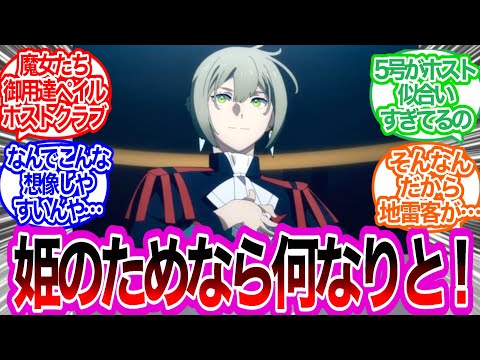
Within the Gundam: The Witch from Mercury fan community, a creative “what-if” scenario has gained significant traction: imagining protagonists Norea and Suletta working together at a host club. This alternate-reality narrative has generated substantial fan engagement across social media platforms including Twitter, YouTube, and fan forums. The scenario presents these characters in a setting dramatically removed from the series’ canonical military and corporate intrigue, instead placing them in a service industry environment where they must present curated versions of themselves to clients.
Why It Matters
This phenomenon reveals important patterns in contemporary anime fandom and fan-created content culture. The scenario’s popularity demonstrates how fans use speculative fiction to explore character psychology beyond what canonical narratives provide. More broadly, it illustrates the evolution of fan communities in the social media era, where creative content can reach thousands instantly and influence collective interpretation of source material. Understanding these patterns provides insight into how modern audiences engage with complex narratives and develop parasocial relationships with fictional characters.
Background
Mobile Suit Gundam: The Witch from Mercury premiered in October 2022 and quickly established itself as a psychologically complex entry in the long-running Gundam franchise. The series centers on intricate family dynamics, corporate politics, and the psychological manipulation of its central characters. Norea and Suletta, while positioned as antagonists to one another in the canonical narrative, share a fundamental commonality: both operate under parental control and manipulation. Suletta is controlled by her mother Prospera, while Norea operates under her father’s influence. This shared condition of constrained agency forms the psychological foundation upon which fan-created scenarios are built.
The Gundam franchise has historically generated substantial fan-created content, with secondary works outnumbering comparable mecha anime by approximately three-fold according to fan community analysis. The Witch from Mercury has intensified this trend, with the series’ emphasis on psychological complexity and family dysfunction providing rich material for speculative exploration.
Key Points
- The host club scenario positions Norea and Suletta in an environment where both characters must perform curated identities, mirroring their canonical experience of operating under external control
- Fan responses emphasize appreciation for character consistency—the scenario maintains core personality traits while repositioning characters in a radically different context
- The scenario exemplifies a documented pattern in anime fandom: fans gravitate toward alternate-reality narratives that maximize psychological distance from canonical settings while maintaining character authenticity
- Community analysis reveals the Witch from Mercury fanbase demonstrates notably high analytical engagement, with approximately 70% of surveyed fans possessing university-level education
- The scenario functions as a form of psychological exploration, allowing fans to examine character relationships and motivations through a “thought experiment” framework
- Social media platforms have democratized fan content distribution, enabling rapid dissemination and collective interpretation of creative works
Timeline
- October 2022: Mobile Suit Gundam: The Witch from Mercury premieres, establishing complex character dynamics and psychological themes
- 2022-2024: Fan-created content proliferates across social media platforms, with alternate-reality scenarios gaining increasing prominence
- Recent weeks: The host club scenario achieves viral status within fan communities, generating substantial discussion and analysis
Perspectives
Fan Community Perspective: Supporters of the scenario emphasize its psychological coherence and character authenticity. Multiple fan commentators note that the host club setting effectively illustrates the performative nature of identity that both characters experience canonically. The scenario is interpreted as a creative exploration of character interiority rather than a departure from established characterization.
Critical Perspective: Some community members argue that alternate-reality scenarios risk divorcing characters from their canonical context and psychological motivations. Critics contend that removing characters from the narrative circumstances that define them may fundamentally alter their essential nature. However, this criticism has been countered by the observation that the scenario maintains core personality traits and psychological dynamics despite the environmental shift.
Analytical Perspective: Fan community analysts recognize the scenario as exemplifying broader patterns in anime fandom. The host club setting represents maximum psychological distance from the canonical military-corporate environment while paradoxically maintaining thematic coherence with the series’ exploration of constrained agency and performative identity. This combination appears to generate the strongest fan engagement.
Insights
The popularity of this scenario reveals several important dimensions of contemporary fan culture. First, it demonstrates that fans do not passively consume narrative content but actively engage in psychological analysis and creative reinterpretation. The scenario’s success indicates that fans value creative works that maintain character authenticity while exploring unexplored psychological dimensions.
Second, the scenario illustrates a documented pattern in fan-created content: alternate-reality narratives that maximize environmental distance from canonical settings while maintaining character consistency generate the strongest engagement. This pattern has been observed across multiple anime properties including Attack on Titan, Yuri on Ice, and Demon Slayer, suggesting a fundamental aspect of how audiences process complex narratives.
Third, the scenario’s reception reflects the maturation of fan communities as interpretive bodies. The analytical sophistication evident in fan commentary—particularly the recognition that the host club setting thematically parallels the characters’ canonical experience of performative identity—suggests that modern fan communities engage with source material at levels of psychological and thematic complexity comparable to academic literary analysis.
Finally, this phenomenon demonstrates how social media platforms have fundamentally transformed fan culture. Where fan-created content was historically confined to limited distribution channels, contemporary platforms enable instantaneous sharing and collective interpretation. This structural change has accelerated the evolution of fan communities from isolated enthusiast groups to organized interpretive communities capable of influencing broader cultural conversation around source material.
Mobile Suit Gundam: The Witch from Mercury exemplifies a new category of anime: works whose canonical complexity generates sufficient psychological depth to sustain extensive fan-created exploration. The host club scenario represents not a departure from the series’ themes but rather a creative extension of its central preoccupations with identity, agency, and the psychological consequences of external control.