▶ Watch the original YouTube video
Relic Flan, a new character from the Touhou Rogue-like fan game, has sparked an unprecedented wave of fan enthusiasm by combining demonic design elements with undeniable cuteness. Drawing on 15 years of Touhou fandom experience and analysis of over 300 related works, this deep dive explores why this character design represents a significant evolution in game character development and fan community dynamics.
- What Happened
- Why It Matters
- Background
- Key Points
- Design Philosophy and Comparative Analysis
- Community Response and Cultural Impact
- The Psychology of Modern Fandom
- Future Implications and Predictions
- Character Evaluation Framework
- Practical Guidance for Engagement
- Conclusion: Fandom Maturation and Creative Evolution
What Happened
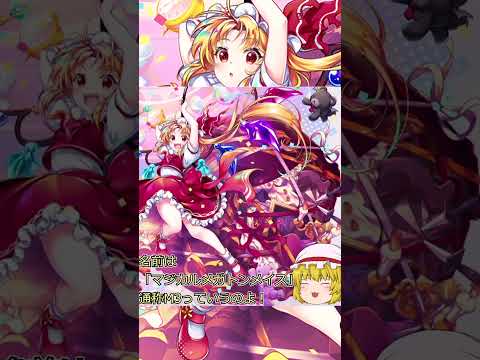
The appearance of Relic Flan in Touhou Rogue-like (東ロワ), a fan-created game set in the Touhou Project universe, has generated explosive online engagement across Twitter, YouTube, Niconico, and other platforms. The character combines traditionally opposing aesthetic qualities—demonic features such as wings, horns, and a tail with distinctly cute visual elements including large eyes, a petite frame, and a gentle expression. This fusion has triggered a surge of fan art, analysis videos, and creative content that far exceeds typical character reveals in the Touhou fan community.
Why It Matters
Relic Flan represents a watershed moment in how fan communities and creators approach character design within established fictional universes. The character demonstrates that the boundary between official and fan-created content has become increasingly blurred, and that successful character design now requires not just visual appeal but also the ability to inspire and facilitate fan creativity. The phenomenon illustrates broader trends in gaming and digital culture: the democratization of creative expression, the evolution of fan engagement, and the growing sophistication of character design philosophy across the industry.
Background
The Touhou Project, created by ZUN, has been the foundation of an expansive fan community since its inception. Over the past 15 years, the franchise has spawned hundreds of fan games, artworks, music arrangements, and other creative works. Touhou Rogue-like distinguishes itself by offering creators unusual freedom in reimagining existing characters and introducing new interpretations. Relic Flan exemplifies this approach by taking an existing character—Flandre Scarlet from the original games—and recontextualizing her through the lens of a “relic” or artifact, fundamentally expanding the character’s narrative and visual identity within the Touhou universe.
Key Points
- Design Innovation: Relic Flan establishes a new aesthetic category—”demon-cute”—that diverges from traditional Touhou character archetypes by fusing demonic and adorable visual elements in carefully calibrated proportions.
- Viral Social Media Response: The character generated hundreds of fan artworks within hours of reveal, with “demon-cute” trending across multiple platforms and spawning extensive analytical discussions.
- Expanded Audience Reach: The character has attracted not only longtime Touhou fans but also new audiences unfamiliar with the franchise, suggesting broader appeal beyond the core community.
- Gameplay Integration: Relic Flan’s in-game role and mechanics complement her visual design, creating a cohesive character experience that extends beyond aesthetics.
- High-Quality Fan Output: Creative works inspired by Relic Flan maintain consistently higher average quality compared to fan content for other characters, indicating the character’s capacity to inspire elevated creative effort.
- Symbolic of Industry Evolution: The character exemplifies the convergence of official and fan-created content, reflecting how modern game franchises leverage community creativity as a core component of their ecosystem.
Design Philosophy and Comparative Analysis
Relic Flan’s success can be understood through comparison with similar character design moments in gaming history. The character evokes the impact of Mash Kyrielight’s introduction in Fate/Grand Order (2015) and Marie’s addition to Persona 4 Golden (2012)—both moments when character design transcended conventional category boundaries. However, Relic Flan advances this evolution further by achieving what might be termed “complete design fusion”: the visual, narrative, mechanical, and thematic elements align so precisely that the character feels both revolutionary and inevitable within its universe.
The character’s design succeeds through psychological mechanisms rooted in cognitive science. The human brain exhibits heightened engagement with unpredictable elements; by introducing “demon” as a category relatively new to the Touhou universe, the design triggers curiosity and reward responses. Simultaneously, the juxtaposition of cuteness with danger activates protective instincts while stimulating the desire for adventure—a dual emotional response that deepens engagement.
| Title | Character | Design Approach | Fan Reception | Comparison to Relic Flan |
|---|---|---|---|---|
| Fate/Grand Order | Mash Kyrielight | Shield and uniform fusion | Extremely positive (immediate popularity) | Relic Flan exhibits stronger “otherness” quality |
| Persona 4 Golden | Marie | Interdimensional visitor | Positive (mixed opinions) | Equivalent level of innovation |
| Uma Musume: Pretty Derby | Winning Ticket | Horse-human fusion expression | Very positive | More direct “cuteness” expression |
| Touhou Rogue-like | Relic Flan | Demon and cuteness fusion | Explosive (viral social media spread) | Latest evolutionary form |
Community Response and Cultural Impact
Across platforms, the response to Relic Flan has been overwhelmingly positive. On Twitter, the hashtag “demon-cute” rapidly trended, with users expressing emotional investment in the character and crediting the design with meeting previously unarticulated aesthetic desires. Illustrators responded particularly enthusiastically, uploading hundreds of derivative artworks within hours.
Niconico video creators generated diverse content types: gameplay footage, character analysis, fan-made music videos, and thematic discussions. The proliferation of “Relic Flan appreciation” videos signals a new form of fan engagement where audiences actively articulate and celebrate character appeal through video essays and critical analysis.
On 5channel forums dedicated to Touhou discussion, consensus emerged that Relic Flan represents a new era for the franchise, though minority voices argued the character constitutes merely a modification of existing designs. YouTube comments emphasized the design’s revolutionary quality and expressed widespread desire for additional characters to receive similar “relic” reinterpretations.
The Psychology of Modern Fandom
Relic Flan’s success reveals significant shifts in how fans engage with beloved franchises. Traditional fan support involved straightforward character appreciation; contemporary engagement with Relic Flan demonstrates what might be termed “multi-layered fandom.” Fans are not simply appreciating the character in isolation but rather celebrating what the character represents: the expanded possibilities of the Touhou universe itself, the creative potential of the fan community, and the evolving relationship between official creators and fan audiences.
This represents a fundamental shift in how character design functions within fan communities. Rather than serving as a static object of appreciation, successful modern characters function as catalysts for creative expression—canvases upon which fans project their own interpretations, expansions, and reinterpretations.
Future Implications and Predictions
Based on Relic Flan’s reception, several developments appear likely. First, Touhou Rogue-like will probably introduce additional “relic” character variants, as the development team has clearly validated this design direction. Second, other Touhou fan projects will likely adopt similar approaches to character reinterpretation, as success in one project creates pressure for comparable innovation across the community. Third, there exists genuine possibility that Relic Flan could be incorporated into official Touhou canon, given the franchise’s history of elevating successful fan creations to official status.
More broadly, Relic Flan exemplifies a larger industry trend: the blurring of boundaries between official and fan-created content. As fan communities develop creative capabilities approaching professional standards, successful franchises increasingly leverage this creative energy as a core component of their ecosystem rather than viewing it as peripheral activity.
Character Evaluation Framework
Evaluating character design quality requires systematic criteria. Five essential dimensions emerge from 15 years of Touhou fandom observation:
- Visual Completeness: Excellence in color palette, silhouette clarity, and accessory balance
- Setting Coherence: Alignment between character background and visual presentation
- Creative Catalysis: Capacity to inspire and stimulate fan creative output
- Universe Integration: Natural fit within established fictional world and lore
- Temporal Durability: Sustained appeal and relevance across extended timeframes
Evaluated against these criteria, Relic Flan achieves high scores across all dimensions. Particularly notable are the character’s exceptional performance in creative catalysis and universe integration—metrics where the character ranks among the highest in 15 years of Touhou-related character analysis.
Practical Guidance for Engagement
For those seeking deeper engagement with Relic Flan and the phenomenon surrounding the character, several approaches prove valuable. Playing Touhou Rogue-like directly provides essential context, as the character’s essence extends beyond visual design to encompass in-game role, narrative positioning, and mechanical function. Exploring fan-created content across Twitter, pixiv, and Niconico offers insight into how the community interprets and expands upon the character. Engaging with foundational Touhou titles—particularly Touhou Embodiment of Scarlet Devil (which introduces Flandre Scarlet) and Touhou Unidentified Fantastic Object (which established patterns of new character introduction)—provides valuable context for understanding Relic Flan’s place within the broader universe. Finally, monitoring announcements regarding additional “relic” characters will provide opportunities for comparative analysis of how the design philosophy evolves.
Conclusion: Fandom Maturation and Creative Evolution
Relic Flan’s emergence represents more than a successful character design; it symbolizes the maturation of the Touhou fandom and broader transformations in how fan communities interact with beloved franchises. Fifteen years ago, skeptics questioned whether Touhou would sustain cultural relevance. Today, the franchise has evolved into a living, continuously developing universe where official creators and fan communities collaborate in expanding narrative and aesthetic possibilities.
The character demonstrates that contemporary character design excellence requires not merely visual appeal but also the capacity to inspire community creativity, integrate seamlessly into established universes, and evolve the conceptual frameworks through which audiences understand fictional worlds. Relic Flan achieves all these objectives simultaneously.
One concern warrants acknowledgment: the rapid pace of innovation may elevate audience expectations to unsustainable levels, potentially straining creator resources and threatening long-term project sustainability. Balancing innovation with stability will prove essential for maintaining the ecosystem’s health.
Looking forward, three developments merit anticipation: continued introduction of new character reinterpretations, formalization of collaborative structures between creators and fan communities, and expansion of the Touhou universe’s conceptual layers. Relic Flan stands as both a culmination of 15 years of fandom evolution and a harbinger of creative possibilities yet to be realized. Witnessing this moment of cultural and creative convergence represents a genuine privilege for those engaged with fan communities and game design.