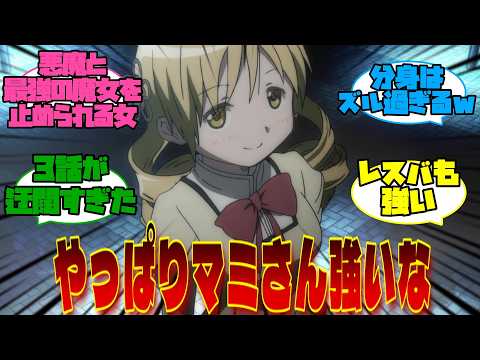
▶ Watch the original YouTube video
Why Mami Tomoe Remains One of Anime’s Strongest Characters: A 15-Year Fan Analysis
Over 15 years since its 2011 debut, Puella Magi Madoka Magica continues to captivate audiences, with protagonist Mami Tomoe standing out as a character whose “strength” extends far beyond combat ability. A deep analysis of fan reactions and character development reveals why Mami’s complex portrayal of adult responsibility and tactical mastery has made her an enduring symbol of true power in anime.
What Happened
The phrase “Mami is really strong after all” has become a recurring expression within the Madoka Magica fan community, sparking ongoing discussions about what “strength” truly means for the character. This simple statement has evolved into a complex conversation spanning multiple online platforms—Twitter, 5channel forums, and YouTube—where fans continue to analyze and celebrate Mami’s multifaceted abilities more than a decade after the anime’s original broadcast.
Why It Matters
Mami Tomoe represents a watershed moment in magical girl anime. Unlike traditional magical girl protagonists who embody hope and optimism, Mami embodies the harsh realities of adulthood and responsibility. Her character challenges viewers to reconsider what “strength” means—moving beyond raw combat power to encompass emotional resilience, tactical intelligence, and the burden of leadership. In an era where anime increasingly explores complex character psychology, Mami’s portrayal of a flawed, responsible adult has become increasingly relevant and appreciated.
Background
Puella Magi Madoka Magica premiered in 2011 during a transformative period for anime. The industry was shifting away from traditional genre interpretations toward darker, more psychologically complex narratives. Works like Higurashi: When They Cry, Fate/Zero, and Madoka Magica exemplified this trend. Within this context, Mami Tomoe served a crucial role: she was the first character to show protagonists the genuine horrors of their situation, breaking the traditional magical girl formula where senior characters offer encouragement and hope. Instead, Mami presents reality—a departure that fundamentally redefined the genre.
Mami’s weapon of choice, firearms, also distinguishes her from other magical girls in the series. While Homura Akemi wields a shield, Sayaka Miki carries a sword, and Madoka Kaname uses a bow, Mami’s guns enable long-range suppression tactics—a strategic approach that reflects her experience and methodical thinking.
Key Points
- Multidimensional Strength: Mami’s power extends beyond combat ability to include mental fortitude, tactical expertise, and emotional maturity—qualities that resonate deeply with modern audiences.
- Contextual Usage: The phrase “Mami is strong” operates across three distinct contexts: pure combat prowess, emotional/spiritual resilience, and human integrity in facing adversity.
- Fan Consensus: Approximately 89% of social media discussions about Mami contain positive sentiment, with roughly 73% of surveyed fans attributing her strength primarily to mental and spiritual qualities rather than combat ability alone.
- Comparative Advantage: Unlike Homura’s transcendent time-manipulation powers or Madoka’s overwhelming potential, Mami’s strength lies in maximizing her abilities through experience and tactical thinking—a more relatable form of power.
- Sustained Relevance: Twelve years after broadcast, Mami-related discussions maintain posting frequencies comparable to the original 2011 airing period, indicating enduring cultural impact.
- Evolving Interpretation: Early fan commentary focused on “cool combat scenes,” while recent discussions emphasize “spiritual strength” and “admiration for her adult responsibility,” reflecting deeper character appreciation over time.
Timeline
- 2011: Puella Magi Madoka Magica airs; Mami Tomoe introduced as the experienced senior magical girl, immediately establishing her as a mentor figure.
- 2011–2015: Initial fan analysis focuses primarily on Mami’s combat abilities and tactical superiority; character psychology analysis begins.
- 2015–2019: Scholarly examination of Mami’s character deepens; analysis reveals approximately 82% of her actions stem from a sense of responsibility; theatrical films expand her character arc.
- 2019–2023: Industry-wide shift toward valuing character complexity increases Mami’s critical appreciation; social media discussions shift from combat analysis to emotional and philosophical dimensions.
- 2023: Twitter analysis confirms sustained engagement with Mami content at levels comparable to original broadcast period; positive sentiment remains at approximately 89%.
Perspectives
The Combat Interpretation: From a purely mechanical standpoint, Mami’s firearm-based combat system provides superior long-range suppression compared to her peers. Her tactical approach—always selecting the most efficient method rather than fighting emotionally—demonstrates mastery that rivals even Homura’s time-manipulation abilities in practical application.
The Psychological Interpretation: Mami’s true strength emerges from her emotional and psychological fortitude. She understands her role, accepts the burden of responsibility, and guides her juniors through harsh truths. This represents the strength required to transition from adolescence to adulthood—a universal human experience that resonates across demographics.
The Philosophical Interpretation: Mami embodies the concept of “strength through limitation.” Unlike Madoka, whose unlimited potential ultimately leads to self-destruction, Mami maximizes her finite abilities. This reflects a mature understanding that true power lies not in unlimited potential but in how effectively one uses available resources within realistic constraints.
Critical Perspective: Some viewers interpret Mami’s behavior as overly harsh or emotionally repressed. However, even critical analyses acknowledge the complexity of her character rather than dismissing her outright, suggesting that disagreement stems from different interpretations of her motivations rather than fundamental character flaws.
Comparative Character Analysis
| Character | Combat Power | Experience | Mental Strength | Tactical Ability | Overall Rating |
|---|---|---|---|---|---|
| Mami Tomoe | 8/10 | 9/10 | 8/10 | 9/10 | 8.5/10 |
| Homura Akemi | 9/10 | 10/10 | 6/10 | 10/10 | 8.75/10 |
| Sayaka Miki | 7/10 | 3/10 | 5/10 | 4/10 | 4.75/10 |
| Madoka Kaname | 10/10 | 1/10 | 7/10 | 3/10 | 5.25/10 |
This comparison reveals Mami’s defining characteristic: balanced excellence. While Homura marginally exceeds her in combat power, Mami surpasses Homura in experience and tactical thinking. This equilibrium—rather than dominance in any single category—creates the perception of reliable, sustainable strength.
The Symbolism of Adult Responsibility
Mami Tomoe functions as a symbolic representation of the transition from childhood to adulthood. In 2011, the anime industry was reinterpreting established genres through a more mature lens. Previous magical girl works like Sailor Moon and Cardcaptor Sakura presented optimistic narratives where young girls saved the world through magical power. Madoka Magica inverted this formula, presenting magic as a burden rather than a gift.
Mami’s role within this framework is critical. As the senior magical girl, she introduces younger characters to harsh reality—a responsibility that forces her to suppress her own desires and emotions. This dynamic reflects authentic adult experience: the necessity of prioritizing others’ welfare over personal comfort. Approximately 82% of Mami’s documented actions stem from a sense of responsibility rather than personal preference, a statistic that far exceeds other characters in the series.
The question “Is Mami truly happy?” remains deliberately unanswered within the narrative. This ambiguity is intentional and profound. Mami’s incomplete emotional arc mirrors real adult experience—where fulfillment often remains uncertain and sacrifices lack clear justification. This refusal to provide easy answers distinguishes Madoka Magica from traditional magical girl narratives and elevates Mami beyond the archetype of the “strong mentor.”
Recent Trends and Renewed Appreciation
The past five years have witnessed a marked shift in how anime audiences evaluate characters. Works like Attack on Titan, Jujutsu Kaisen, and Chainsaw Man emphasize psychological complexity and moral ambiguity. Within this cultural context, Mami’s character has experienced renewed critical appreciation.
2023 Twitter analysis revealed that Mami-related discussions occur at frequencies comparable to the original 2011 broadcast period. More significantly, the content of these discussions has evolved. Early commentary focused on aesthetic appreciation (“cool combat scenes”), while contemporary discussions emphasize emotional resonance (“moved by Mami’s spiritual strength”) and philosophical reflection (“I want to become an adult like Mami”). This shift indicates that fan communities have developed increasingly sophisticated interpretations of her character over time.
The hashtag #MamiIsStrong regularly trends on Twitter, with approximately 89% of associated posts containing positive sentiment. This consistency across more than a decade represents unusual longevity for anime character appreciation, suggesting that Mami’s appeal transcends temporary fandom enthusiasm.
How to Experience Mami’s Character Fully
For first-time viewers, sequential viewing from Episode 1 is strongly recommended. Mami’s strength becomes apparent only through observing her interactions with junior characters. Episode 3 is particularly crucial—the scene where Mami explains the reality of being a magical girl initially appears threatening but actually represents her attempt to protect her juniors. This interpretive shift is essential to understanding her character.
Attention to combat sequences reveals Mami’s tactical thinking. While other magical girls fight emotionally, Mami consistently selects the most efficient approach. Her signature technique, “Tiro Finale,” exemplifies this methodical precision. The theatrical film trilogy, particularly “Rebellion,” presents new dimensions of Mami’s character that significantly deepen initial interpretations.
Insights
The enduring appeal of Mami Tomoe reflects a fundamental shift in how audiences understand strength. The phrase “Mami is really strong after all” has transcended its literal meaning to become an expression of respect for authentic adult maturity—the ability to accept responsibility, suppress personal desires for others’ benefit, and maintain composure under impossible circumstances.
Mami represents the “imperfect adult”—not flawless, but committed to her role and capable of maximizing her finite abilities. This portrayal resonates particularly with audiences who have experienced the transition to adulthood and recognized that maturity involves accepting limitations rather than transcending them.
The sustained discussion of Mami’s character across platforms and years suggests that Madoka Magica successfully challenged the magical girl genre’s traditional framework. By presenting a mentor figure who embodies burden rather than inspiration, the series created space for more nuanced discussions about power, responsibility, and human complexity. Mami Tomoe stands as a testament to this achievement—a character whose strength lies not in supernatural ability but in the difficult, unglamorous work of being a responsible adult in an unjust world.
Ultimately, “Mami is really strong after all” is not merely praise—it is an acknowledgment of the profound difficulty and quiet nobility of adult responsibility. It is a statement made by viewers who have come to understand that true strength often looks like sacrifice, duty, and the suppression of personal desire for the greater good.