▶ Watch the original YouTube video
Why Caesar Clown Is One Piece’s Most Despicable Villain: A Deep Analysis of Fan Reactions
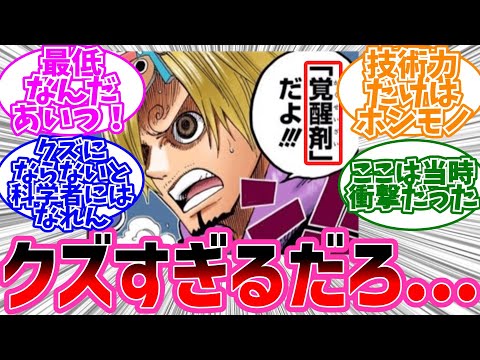
Caesar Clown, the antagonist from One Piece’s Punk Hazard arc, has consistently earned the title of “most despicable” among fans for his unrelenting cruelty and moral bankruptcy. Through 15 years of One Piece analysis and comparison with other anime villains, this examination explores why Caesar’s pure selfishness and lack of redemption make him a uniquely reprehensible character—and why that may be precisely the point.
- What Happened
- Why It Matters
- Background
- Key Points
- Timeline
- Perspectives
- Comparative Analysis: Caesar Among Anime Villains
- Why Caesar Is “The Worst”: Three Core Elements
- The Narrative Function of Absolute Evil
- Fan Psychology: Why “Caesar Is the Worst” Resonates
- Creator Intent: Why Oda Designed Caesar This Way
- Insights
What Happened
Caesar Clown emerged as a major antagonist during One Piece’s Punk Hazard arc, where he conducted illegal human experiments on children, disposed of subordinates without remorse, and repeatedly fled from confrontation. Unlike most One Piece villains who possess some ideological motivation or tragic backstory, Caesar operates purely from self-interest and greed. His consistent refusal to take responsibility for his actions, combined with his exploitation of the vulnerable, has made him the target of overwhelming fan criticism across social media platforms and anime communities.
Why It Matters
Caesar Clown represents a deliberate departure from creator Eiichiro Oda’s established pattern of giving villains depth and motivation. In a series where antagonists like Crocodile, Doflamingo, and Kaido all possess complex philosophies or tragic origins, Caesar’s existence as a purely selfish, unredeemable character serves a specific narrative function. His despicability forces audiences to confront what “absolute evil” looks like and raises questions about moral clarity in storytelling. Understanding Caesar’s role illuminates how One Piece uses character design to explore themes of justice, responsibility, and the nature of villainy itself.
Background
Caesar Clown was introduced during the Punk Hazard arc (2012–2013 in the manga), occurring roughly 20 years into One Piece’s serialization. At this point in the series, Oda had established a consistent pattern: virtually every significant villain possessed some form of belief system, personal tragedy, or ideological conviction that motivated their actions. Crocodile sought to create a utopian desert kingdom; Doflamingo pursued power through social manipulation; even Arlong fought for his species’ survival. Caesar broke this mold entirely. His crimes—human experimentation on children, betrayal of allies, and cowardly flight—stem from nothing but personal ambition and sadistic pleasure. This deliberate subversion of the established villain archetype suggests intentional character design rather than oversight.
Key Points
- Caesar Clown is consistently rated by One Piece fans as the most despicable villain due to his unrelenting cruelty toward children, casual disposal of subordinates, and complete lack of moral conviction
- Unlike other One Piece antagonists, Caesar possesses no ideological motivation, tragic backstory, or philosophical belief system—he acts purely from self-interest
- His crimes include conducting illegal human experiments on children, using subordinates as expendable tools, and repeatedly abandoning responsibility through cowardly escape
- Fan reactions span from pure condemnation to recognition that Caesar’s “absolute evil” serves a narrative function by providing moral clarity and highlighting the heroes’ righteousness
- Caesar’s character design appears intentional, representing a deliberate exception to Oda’s typical approach of humanizing villains through motivation and backstory
- His role functions as a “stepping stone” villain rather than a major antagonist, designed to provide cathartic victory rather than philosophical confrontation
Timeline
- 2012–2013: Caesar Clown introduced during Punk Hazard arc serialization; conducts human experiments and exploits subordinates
- Anime adaptation period: Caesar’s character receives comedic emphasis, highlighting his incompetence alongside his cruelty
- Dressrosa arc: Caesar continues as secondary antagonist, reinforcing his role as expendable villain rather than major threat
- Ongoing: Caesar remains unredeemed and unrepentant, maintaining his status as pure antagonist without character development
Perspectives
The Condemnation View: The majority of One Piece fans express unambiguous hatred toward Caesar. Twitter consistently trends “Caesar is the worst” during Punk Hazard episodes. The primary criticism centers on his exploitation of children, his treatment of subordinates as disposable, and his refusal to accept responsibility. This perspective views Caesar as irredeemably evil and finds satisfaction only in his defeat.
The Structural Analysis View: A smaller but vocal segment of fans recognizes Caesar’s narrative function. These viewers argue that his “absolute evil” provides necessary moral clarity in a series increasingly populated by morally ambiguous characters. As One Piece has progressed, villains like Doflamingo and Kaido have received sympathetic backstories and complex motivations. In this context, Caesar’s pure selfishness and lack of redemption potential create a counterbalance, offering audiences a clear distinction between right and wrong.
The Psychological Interpretation: Deeper fan analysis suggests that Caesar embodies real-world frustrations: the incompetent authority figure, the executive who avoids accountability, the powerful person who exploits the vulnerable without consequence. This interpretation positions Caesar not merely as a fictional villain but as a symbol of systemic injustice, making his defeat cathartic on a psychological level beyond simple entertainment.
Comparative Analysis: Caesar Among Anime Villains
Examining Caesar alongside antagonists from other major anime reveals his uniqueness:
| Series | Villain | Nature of Evil | Motivation/Belief System |
|---|---|---|---|
| One Piece | Caesar Clown | Pure selfishness | None; acts solely for personal gain |
| Attack on Titan | Grisha Yeager | Twisted parental obsession | Possesses distorted love for his son; ideological motivation |
| Demon Slayer | Muzan Kibutsuji | Survival instinct and domination | Driven by obsession with immortality and control |
| JoJo’s Bizarre Adventure | Dio Brando | Class consciousness and revenge | Motivated by social ambition and desire for status |
This comparison demonstrates that Caesar stands alone in his complete absence of ideological motivation. Every other major anime villain possesses some driving force—obsession, belief, ambition, or twisted emotion. Caesar’s actions stem from nothing but immediate self-interest, making him structurally unique among contemporary antagonists.
Why Caesar Is “The Worst”: Three Core Elements
Irresponsibility: Caesar refuses to accept consequences for his actions. When his experiments fail, he conceals the truth and flees rather than facing accountability. This behavior resonates deeply with modern audiences because irresponsible authority figures permeate real society. The psychological transfer of real-world frustration onto Caesar intensifies viewer hatred.
Exploitation of the Vulnerable: Caesar’s victims are children and subordinates—those with less power than himself. He deliberately targets the defenseless, a behavior that triggers instinctive human revulsion. This distinguishes him from villains who pose threats to equals or superiors; Caesar is a coward who preys on those unable to resist.
Absence of Redemption: Most One Piece villains eventually demonstrate capacity for growth, understanding, or at minimum, ideological consistency that readers can respect even while opposing them. Caesar shows no such capacity. He never reflects, never questions himself, never demonstrates any human quality beyond cruelty and cowardice. This absence of humanity paradoxically makes him more despicable than more powerful antagonists.
The Narrative Function of Absolute Evil
Industry observation over the past five years reveals a paradoxical trend: as anime increasingly embraces morally gray villains, the narrative need for “absolute evil” has intensified rather than diminished. Series like Attack on Titan have progressively complicated their antagonists’ moral status, while Demon Slayer revealed sympathetic dimensions to its primary villain. Within this landscape, Caesar’s refusal to be humanized serves a crucial function.
One Piece itself demonstrates this pattern. Crocodile eventually shows capacity for cooperation; Doflamingo possesses coherent (if twisted) philosophy; Kaido commands respect through sheer conviction. Against this backdrop, Caesar’s pure malevolence provides contrast. He represents the antithesis of everything Luffy fights for—not a worthy opponent with different ideals, but a parasite who exploits others for amusement. This distinction gives Luffy’s victories against Caesar a different quality: not triumph over a formidable foe, but elimination of a threat to the innocent.
Fan Psychology: Why “Caesar Is the Worst” Resonates
Analysis of fan communities reveals three psychological mechanisms driving Caesar hatred:
Incompetence Frustration: Caesar overestimates his abilities while proving repeatedly ineffectual against the protagonists. This incompetence frustrates viewers because it mirrors real-world experiences with ineffectual authority figures. The combination of arrogance and weakness creates particular irritation—Caesar deserves defeat not through honorable combat but through exposure of his fundamental inadequacy.
Accountability Avoidance: Caesar’s consistent pattern of evading responsibility triggers deep psychological rejection. In societies where institutional accountability remains imperfect, watching a character escape consequences—even temporarily—generates visceral anger. The satisfaction of his eventual defeat stems partly from the fantasy of accountability finally being enforced.
Absence of Growth: Humans instinctively seek narrative redemption arcs. When characters refuse growth, audiences experience cognitive and emotional dissonance. Caesar’s refusal to develop, learn, or change creates a sense of hopelessness that intensifies negative reactions. He represents the nightmare scenario: evil that cannot be reasoned with, reformed, or understood.
Creator Intent: Why Oda Designed Caesar This Way
Two primary motivations appear to underlie Caesar’s characterization:
Moral Clarity: One Piece, while fundamentally an adventure narrative, engages seriously with questions of justice and ethics. The existence of “absolute evil” provides audiences with clear moral reference points. Caesar demonstrates unambiguously what should be opposed, offering readers certainty in a complex world. His presence answers the question “What is evil?” with crystalline clarity.
Heroic Validation: Luffy’s defeat of Caesar carries different weight than victory over a philosophically complex opponent. By defeating someone who exploits children and abandons responsibility, Luffy demonstrates not superior strength but superior morality. This victory validates the heroes’ righteousness in a way that defeating an ideologically motivated antagonist might not.
Insights
Caesar Clown’s persistent status as “the worst” villain in One Piece reveals several truths about storytelling and audience psychology. First, absolute evil—characters devoid of motivation beyond self-interest—remains narratively powerful precisely because it has become rare. In an era of complex, sympathetic antagonists, pure malevolence stands out as shocking.
Second, Caesar demonstrates that villainy need not be sophisticated to be effective. His crimes are straightforward: he hurts the vulnerable and refuses accountability. This simplicity makes him more despicable than elaborate schemes would, because his evil requires no justification, no philosophy, no excuse. He simply chooses cruelty.
Third, Caesar’s character validates the importance of moral clarity in storytelling. While complex villains enrich narratives, audiences require occasional encounters with unambiguous evil to maintain ethical orientation. Caesar serves this function, providing a touchstone against which other characters’ morality can be measured.
Finally, Caesar’s enduring unpopularity suggests that Oda’s characterization succeeded precisely as intended. By creating a villain so thoroughly despicable that he generates consistent, passionate negative reactions, Oda ensured that his defeat would provide genuine cathartic satisfaction. Caesar is not a villain audiences love to hate; he is a villain audiences simply hate—and that hatred serves the narrative purpose of validating the heroes’ righteousness.
The question of whether Caesar might eventually receive a redemptive backstory remains open. If One Piece’s final arcs reveal tragic origins or hidden complexity to Caesar’s character, fan evaluation would shift dramatically. However, current narrative trajectory suggests Caesar will remain unredeemed to the end—a final statement that some evil requires no explanation and deserves no sympathy.