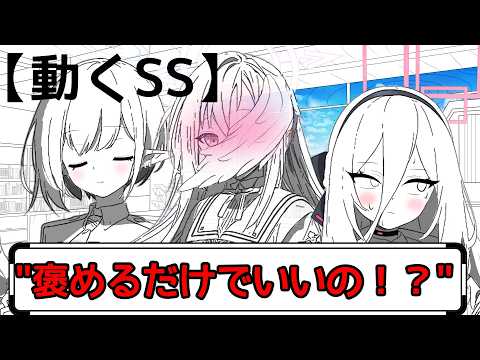
▶ Watch the original YouTube video
How Blue Archive’s Praise ASMR Reveals Modern Society’s Deep Need for Recognition
A fan-created ASMR video featuring Blue Archive’s teacher character praising multiple student characters has become a cultural phenomenon, exposing how contemporary audiences—particularly anime and gaming fans—are experiencing a critical hunger for validation and recognition in an increasingly isolating digital age.
What Happened
A fan-created ASMR video has emerged within the Blue Archive community featuring the game’s teacher protagonist delivering continuous praise to various student characters. Rather than following a traditional narrative structure, the video showcases multiple characters responding differently to being praised—some react with genuine joy, others with bashful embarrassment, and still others with subtle emotional shifts. The video employs ASMR (Autonomous Sensory Meridian Response) techniques, using voice acting and sound design to create an immersive experience where viewers themselves become the recipients of validation and encouragement.
Why It Matters
This seemingly simple concept has resonated deeply with audiences, revealing critical insights about contemporary digital culture and psychological needs. The video’s popularity indicates that a substantial portion of internet users—particularly those engaged with anime and gaming communities—are experiencing significant emotional deficits in their daily lives. The overwhelming positive response in comment sections, with viewers expressing statements like “I’ve never been praised this much” and “this heals my heart,” suggests that the video addresses a genuine psychological need that mainstream society is failing to meet. This phenomenon reflects broader trends in how entertainment media is evolving to serve therapeutic and emotional support functions alongside traditional entertainment purposes.
Background
Blue Archive is a mobile game where players assume the role of a teacher managing multiple student characters. The game’s core mechanic involves building relationships with students through various interactions, including praise and encouragement. The original game design incorporates praise as a meaningful gameplay element that affects character affinity and story progression.
The evolution of “praise scenes” in anime and gaming has accelerated significantly since 2014. Earlier works from 2008-2013 typically emphasized conflict and criticism, but contemporary series like Attack on Titan and Jujutsu Kaisen prominently feature characters validating and encouraging one another as essential components of character development. This shift reflects changing audience preferences and evolving understanding of psychological needs in storytelling.
ASMR content featuring anime and game characters has grown exponentially since 2020, particularly with the rise of VTuber culture. However, dedicated ASMR videos combining character praise with multiple character reactions remain relatively novel, making this Blue Archive creation noteworthy for its execution and focus.
Key Points
- Concept Design: The video strips away complex narrative to focus entirely on a single interaction—praise—presented through multiple character perspectives, creating a concentrated emotional experience.
- Character Authenticity: Each character’s reaction to praise reflects their established personality traits from the original game, demonstrating careful attention to source material and psychological consistency.
- ASMR Integration: The use of ASMR techniques amplifies the emotional impact, creating a direct psychological connection between the audio experience and viewer relaxation or emotional satisfaction.
- Viewer Recognition: Comment sections reveal that many viewers interpret the video as praise directed at themselves, not merely at fictional characters, indicating a parasocial dimension to the experience.
- Psychological Accessibility: The video requires no prior knowledge of Blue Archive to be emotionally effective, making it accessible to anyone experiencing recognition deficits.
- Therapeutic Function: Multiple viewers describe the video as emotionally healing or comforting, suggesting it serves a genuine psychological support function in their lives.
Timeline
- 2008-2013: Early anime era emphasizes conflict and criticism in character interactions; praise scenes remain relatively uncommon.
- 2014-2019: Anime and game narratives increasingly incorporate praise and mutual recognition as important character development elements.
- 2018 onwards: ASMR content analysis begins; character-based ASMR remains minimal at this point.
- 2020-2021: COVID-19 pandemic accelerates demand for comfort and validation content; VTuber culture expands rapidly; character-based ASMR increases significantly.
- 2023 onwards: “Viewer praise” content becomes standard in VTuber programming; fan-created character ASMR reaches mainstream recognition.
- Present: Blue Archive praise ASMR video gains significant traction, exemplifying the maturation of this content category.
Perspectives
Supportive Interpretation: The video represents a healthy creative response to genuine psychological needs. In an era of increased social isolation, economic stress, and workplace pressure, content that provides validation and emotional support serves a legitimate therapeutic function. The video’s quality—with authentic character reactions and careful attention to personality consistency—demonstrates genuine creative effort rather than exploitative manipulation.
Critical Perspective: Some viewers and analysts express concern that such content may encourage unhealthy parasocial relationships and emotional dependency on fictional characters rather than fostering real human connections. The potential exists for viewers to substitute character-based validation for genuine human interaction, potentially worsening social isolation. Additionally, the commodification of emotional support through entertainment raises questions about whether this represents progress or a concerning trend in how society addresses psychological needs.
Cultural Analysis: The video exemplifies how fan communities use creative reinterpretation to address gaps between what original media provides and what audiences actually need emotionally. Rather than passive consumption, fans actively reshape existing intellectual property to better serve their psychological requirements, transforming fan creation from mere entertainment into a form of collective emotional labor and mutual support.
Comparative Analysis
When compared to similar content in other franchises, Blue Archive’s praise ASMR demonstrates distinctive characteristics:
| Content | Praise Frequency | Character Reaction Diversity | Psychological Impact |
|---|---|---|---|
| Blue Archive ASMR | Very High | Very High | Direct and Immediate |
| The Idolmaster: Cinderella Girls | Moderate | Moderate | Indirect and Gradual |
| Love Live! School Idol Festival | Low | Low | Story-Dependent |
Blue Archive’s approach prioritizes direct emotional delivery through concentrated praise sequences, distinguishing it from games that integrate praise as one element among many narrative components.
Viewer Reception
YouTube comments reveal several distinct response patterns. The most common category expresses direct emotional benefit: “I’ve never been praised this much,” “this heals my heart,” and “I didn’t know I needed this.” These comments indicate viewers experiencing genuine emotional satisfaction from the content.
A secondary category praises the production quality and character authenticity: “The reactions match their personalities perfectly” and “this captures the characters’ essence.” These comments suggest viewers appreciate the creative execution and attention to source material.
A smaller critical category raises concerns about ASMR effectiveness and appropriateness: “ASMR doesn’t work for everyone” and “being praised this much feels uncomfortable.” These responses acknowledge legitimate individual variation in response to such content.
Notably, many comments express interest in exploring the original game, suggesting the video functions as effective marketing while simultaneously serving its primary emotional purpose.
Insights
This video’s success illuminates several important truths about contemporary digital culture. First, it demonstrates that entertainment media increasingly serves psychological and therapeutic functions beyond traditional entertainment purposes. As social structures fragment and traditional sources of validation—family, community, workplace—become less reliable, audiences actively seek alternative sources of recognition and encouragement.
Second, the video reveals the sophistication of fan communities in identifying and addressing unmet needs. Rather than passively consuming media, fans creatively reinterpret existing intellectual property to better serve their emotional requirements. This represents not mere escapism but active psychological self-care through creative community participation.
Third, the phenomenon suggests that the anime and gaming industries have successfully created parasocial relationships with audiences—relationships that, while potentially problematic if pursued exclusively, can also serve legitimate emotional functions when balanced with real-world connections. The video’s existence and popularity indicate that audiences understand and accept this dynamic while still finding genuine value in it.
Finally, the video exemplifies how digital culture enables rapid iteration and specialization of content. Within weeks or months, creators can identify emerging psychological needs and produce targeted content addressing them. This represents both opportunity—for genuine emotional support—and risk—for unhealthy dependency on fictional validation.
The broader implication is that contemporary society faces a recognition crisis. Millions of individuals report insufficient validation in their daily lives, creating demand for alternative sources of encouragement. Whether this represents a temporary cultural phenomenon or a permanent shift in how humans seek psychological support remains to be seen. What is clear is that the Blue Archive praise ASMR video addresses a genuine need, and its popularity suggests similar content will continue proliferating across gaming and anime communities.