▶ Watch the original YouTube video
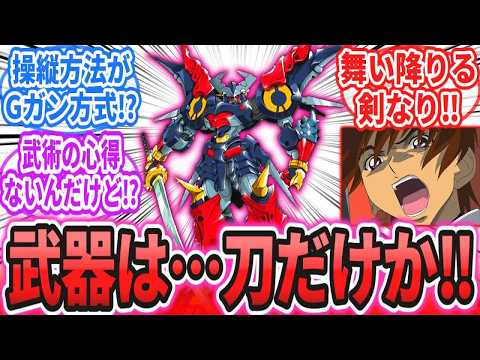
What If Kira’s First Mobile Suit Was the Daizenger? A Deep Analysis of Gundam SEED’s Alternate Timeline
An in-depth exploration of an intriguing “what if” scenario in Mobile Suit Gundam SEED imagines protagonist Kira Yamato piloting the Daizenger—a iconic mecha from the Super Robot Wars series—instead of the Strike Gundam. This thought experiment reveals how a different mobile suit could fundamentally reshape character psychology, narrative tension, and thematic meaning across the entire SEED storyline.
What Happened
A viral online discussion has emerged among Gundam and Super Robot Wars fans exploring an alternate scenario: what if Kira Yamato, the protagonist of Mobile Suit Gundam SEED, piloted the Daizenger as his first mobile suit instead of the Strike Gundam? The Daizenger, known for its pure mechanical design and limited weaponry in the Super Robot Wars franchise, represents a stark philosophical contrast to the Strike’s modular versatility. This hypothetical scenario has sparked widespread debate across Twitter, YouTube, Reddit, and traditional anime forums, with fans and analysts examining how such a change would ripple through character development, narrative structure, and thematic resonance.
Why It Matters
This thought experiment transcends mere fan speculation. It serves as a critical lens for examining the fundamental relationship between mobile suit design and character psychology in the Gundam franchise. By questioning why Kira was assigned the Strike Gundam in the first place, fans implicitly challenge the narrative necessity of the original story choices. The scenario also highlights how modern anime storytelling increasingly emphasizes protagonist limitations and creative problem-solving under constraints—a trend seen in series like Attack on Titan, Jujutsu Kaisen, and Chainsaw Man. Understanding this alternate timeline reveals deeper truths about character agency, mechanical symbolism, and the creative possibilities within established franchises.
Background
Mobile Suit Gundam SEED follows Kira Yamato, a Coordinator (genetically enhanced human) who becomes a mobile suit pilot during an interstellar conflict. His primary machine, the Strike Gundam, is characterized by its modular weapon system and adaptability—qualities that mirror Kira’s own versatility and his tendency to be shaped by external circumstances. The Daizenger, by contrast, is a Super Robot Wars original design known for its emphasis on pure mechanical engineering over flashy beam weaponry. It represents a philosophy of simplicity and direct mechanical power rather than technological sophistication. The Strike Gundam symbolizes Kira’s role as a “chosen one” equipped with the best available technology, while the Daizenger would represent a more grounded, self-reliant approach to combat.
Key Points
- Philosophical Shift: The Daizenger’s pure mechanical design contrasts sharply with the Strike Gundam’s modular versatility, forcing Kira to rely on tactical ingenuity rather than technological superiority.
- Character Psychology: Kira’s Newtype-like intuition would become largely irrelevant with the Daizenger, requiring him to depend on calculated, mechanical logic instead of instinctive decision-making.
- Narrative Tension: Limited weaponry would necessitate creative tactical solutions, increasing dramatic stakes and forcing characters to innovate within constraints.
- Relationship Dynamics: Kira’s independence from Lacus Clyne would increase significantly, as the Daizenger is unrelated to her influence—unlike the Freedom Gundam she provides in the original timeline.
- Thematic Opposition: The contrast between Kira’s Daizenger and Shin Asuka’s Destiny Gundam would shift from a simple power comparison to a philosophical battle between mechanical purity and predetermined destiny.
- Broader Implications: This scenario demonstrates how mobile suit selection functions as narrative shorthand for character identity and thematic meaning in Gundam storytelling.
Timeline of the Scenario’s Development
- 2005: Original Gundam SEED DESTINY broadcast; viewers first experience Kira’s transition from Strike to Freedom Gundam.
- 2008: PS2 release of Super Robot Wars Z introduces widespread familiarity with Daizenger mechanics and design philosophy.
- 2010s–2020s: Anime industry trend toward protagonist limitations and constraint-based storytelling becomes dominant narrative approach.
- 2017: Super Robot Wars V release reinforces Daizenger’s relevance in modern gaming context.
- Recent Years: Online fan communities begin seriously discussing alternate Gundam SEED scenarios, with Kira-Daizenger pairing gaining traction.
Perspectives
Supportive Interpretation: Super Robot Wars fans and certain Gundam analysts view this scenario positively, arguing that the Daizenger’s limitations would create more compelling storytelling. They contend that Kira’s reliance on tactical innovation rather than superior technology would deepen his character arc and create more meaningful conflict. This perspective emphasizes that “limited power breeds creative solutions,” a principle evident in acclaimed modern anime.
Critical Perspective: Traditional Gundam SEED fans express skepticism, arguing that the Daizenger’s aesthetic and mechanical philosophy fundamentally clash with SEED’s “realistic” mobile suit design language. They question whether a Super Robot Wars original design could logically exist within SEED’s established universe. This view prioritizes narrative consistency and world-building coherence over thematic experimentation.
Analytical Middle Ground: Deeper forum discussions acknowledge the scenario’s narrative merit while recognizing the practical contradictions. Participants debate how Kira’s Newtype abilities would function with the Daizenger, whether Lacus would accept such a choice, and how Aslan Zala’s character arc would adapt. These discussions reveal genuine curiosity about the mechanics of character-suit compatibility.
Comparative Analysis: Similar Alternate Scenarios
This thought experiment follows a tradition of “what if” analysis in Gundam fandom. Comparable scenarios include: “What if Amuro fought in Char’s Counterattack with a Jegan instead of the Nu Gundam?” or “What if Banagher had to pilot a mass-production Jesta instead of the Unicorn Gundam?” Each scenario reveals how mechanical limitations force narrative innovation. The pattern is consistent: restricted mobile suit capabilities paradoxically increase dramatic tension and character depth. The Daizenger scenario extends this principle by introducing a design philosophy from an entirely different franchise, creating a more radical departure than typical Gundam alternate timelines.
Insights
This alternate scenario illuminates several truths about Gundam SEED and mobile suit narratives generally. First, it reveals that Kira’s character arc may be constrained by his role as the recipient of increasingly powerful machines. The Strike, Freedom, and Providence Gundams are all provided by external forces—Lacus, the military, or circumstance. The Daizenger, being unconnected to any established power structure, would represent Kira’s first genuine autonomous choice, fundamentally altering his agency within the narrative.
Second, the scenario demonstrates that mobile suit design functions as character symbolism. The Strike Gundam’s modularity mirrors Kira’s adaptability and passivity; the Daizenger’s mechanical purity would symbolize a more grounded, self-reliant identity. This principle extends across the franchise: Amuro’s Nu Gundam represents transcendence, Char’s Sazabi represents ambition, and Kira’s original machines represent external determination.
Third, the scenario reflects contemporary anime storytelling trends. Modern acclaimed series increasingly emphasize protagonist limitations as sources of dramatic tension and character growth. The Daizenger scenario aligns with this sensibility, suggesting that Gundam SEED could have embraced constraint-based narrative design decades before it became industry standard.
Finally, this thought experiment serves as implicit criticism of the original narrative. By asking “what if Kira had a different suit?”, fans are ultimately asking “why was Kira’s agency so limited in the original story?” and “could the narrative have been more compelling with different mechanical choices?” These are legitimate questions about storytelling craft and character development.
Evaluation Framework
To properly assess this scenario, five critical criteria should be applied: (1) philosophical alignment between mobile suit design and pilot psychology; (2) degree of creative problem-solving required under mechanical constraints; (3) how the change affects relationships with other characters; (4) narrative necessity—whether the choice fundamentally alters story meaning; and (5) richness of fan interpretation possibilities. By these standards, the Daizenger scenario scores exceptionally high, particularly in criterion four, as it would force a complete reconsideration of Kira’s role as protagonist and his relationship to destiny, choice, and agency.
How to Engage With This Scenario
For those interested in deeply understanding this alternate timeline, several approaches are recommended. First, experience the Daizenger directly by playing Super Robot Wars Alpha or Z, which allows hands-on understanding of its mechanical philosophy and combat limitations. This experiential knowledge transforms abstract analysis into intuitive understanding. Second, rewatch Gundam SEED with focus on Kira’s moments of genuine choice versus moments when he simply accepts circumstances. This reveals how often external forces determine his path. Third, examine Mobile Suit Gundam Wing as a comparative text, particularly the relationship between Heero’s Wing Gundam and Trowa’s Gundam Sandrock—two pilots with opposite mechanical philosophies whose conflict mirrors what Kira versus Shin might become in this scenario.
Community Response Summary
Online reactions to this scenario are remarkably diverse. Twitter discussions from Super Robot Wars fans express enthusiasm, with comments like “I want to see Daizenger Kira” and “the suit philosophy actually aligns perfectly.” YouTube comments reveal more skepticism, with viewers noting that the Daizenger’s aesthetic doesn’t match Kira’s image and questioning whether cross-franchise integration is narratively viable. Traditional anime forums and 5channel’s Gundam threads host the most substantive discussions, with participants raising specific plot contradictions: How would Kira’s Newtype abilities function? Would Lacus accept this choice? How would Aslan respond? These questions, while critical, are genuinely productive, as answering them reveals the structural foundations of SEED’s narrative.
Conclusion
The Daizenger scenario transcends casual fan speculation to become a meaningful thought experiment about character agency, mechanical symbolism, and narrative design. It asks fundamental questions: Is Kira truly the protagonist of his own story, or merely a vessel for predetermined choices? Could SEED have embraced constraint-based storytelling before it became industry standard? What does it mean when a character’s identity is inseparable from the machine they pilot? These questions matter not because they have definitive answers, but because asking them deepens our understanding of how Gundam SEED works as narrative and why certain creative choices were made. This scenario represents not a criticism of the original work, but rather a respectful interrogation of its possibilities—the kind of engaged fandom that keeps franchises alive and meaningful across decades.