▶ Watch the original YouTube video
For the Ultraman franchise’s 60th anniversary, producers made an unprecedented decision: casting the original actors who played the transformed heroes to voice their characters. This move has sent shockwaves through the fan community, revealing what many see as genuine love for the series rather than mere nostalgia marketing.
What Happened
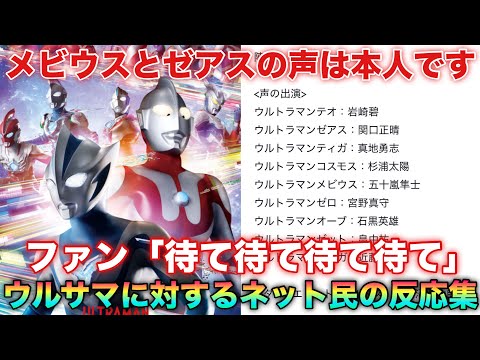
Ultraman Zeas and Ultraman Mebius will feature voice acting from Masaharu Sekiguchi, the original actor who played the transformed hero in Mebius nearly 20 years ago. This marks a rare instance of the actual performer providing the voice for their character, a practice that has been almost non-existent in the Ultraman franchise’s history. The announcement has generated widespread fan reactions, with many expressing disbelief that such a decision could actually happen.
Why It Matters
This casting choice represents far more than a simple voice acting decision. It signals that the production team is willing to break established industry conventions to honor the franchise’s legacy and the actors who shaped it. For a series that has spanned 58 years and multiple generations of viewers, this decision demonstrates a commitment to recognizing how deeply Ultraman has influenced the careers and lives of its performers. The move also suggests a shift in how legacy franchises might approach anniversary celebrations—prioritizing genuine respect over commercial exploitation of nostalgia.
Background
The Ultraman franchise began in 1966 and has become a cornerstone of Japanese popular culture. Traditionally, voice acting for the transformed heroes has been handled by professional voice actors, not the original performers. However, there have been rare exceptions. Ultraman Tiga (1996) featured the original actor providing voice work, and Ultraman Mebius (2006) similarly used the original performer. Despite these precedents, fans considered the prospect of original actors reprising their roles for new productions to be virtually impossible due to scheduling, budget constraints, and career changes among former performers.
For the 60th anniversary celebration, the production team made the extraordinary decision not only to cast Masaharu Sekiguchi but also to bring back other retired or career-changed actors from previous Ultraman series. Some performers have since transitioned to different professions—one protagonist from an earlier series is now a writer—yet the producers actively sought them out for participation.
Key Points
- Original Actor Voice Casting: Masaharu Sekiguchi, who played the transformed hero in Ultraman Mebius, now provides voice acting for both Mebius and Zeas in the 60th anniversary production.
- Unprecedented Production Scale: The team recalled retired and career-changed actors, demonstrating a willingness to invest significant effort in honoring the franchise’s history.
- Attention to Detail: The production extended to casting original suit actors for monster roles, showing meticulous commitment to authenticity.
- Multi-Generational Approach: Narration features prominent voice actors like Koji Ishizaka, while different performers represent different eras of Ultraman, creating a narrative that spans the franchise’s entire history.
- Fan Response: The announcement generated overwhelming positive reactions, with fans expressing shock and emotional gratification that their long-held wishes were finally realized.
- Industry Implications: This decision may establish a new precedent for how legacy franchises approach anniversary celebrations, potentially influencing other special tokusatsu (live-action special effects) productions.
Timeline
- 1966: Ultraman franchise launches, establishing the foundation for decades of storytelling.
- 1996: Ultraman Tiga airs with original actor providing voice work, establishing an early precedent.
- 2006: Ultraman Mebius features Masaharu Sekiguchi as the original voice performer.
- 2016: Ultraman Orb continues the franchise with Hideo Ishiguro in the lead role.
- 2024: Ultraman 60th Anniversary production announces original actor voice casting for Zeas and Mebius, creating widespread fan excitement.
Perspectives
From a fan perspective, this decision represents validation of their deep attachment to the franchise. After 15+ years of following Ultraman, longtime viewers have consistently hoped for original actors to return to their roles. The 60th anniversary announcement fulfills this wish, suggesting that the production team genuinely listens to fan desires and values their emotional investment in the series.
From a production standpoint, this decision reflects a fundamental shift in how the franchise is valued. Rather than treating Ultraman as a commercial product to be exploited for nostalgia, the producers are treating it as a cultural legacy worthy of respect. This approach requires overcoming logistical challenges—tracking down performers who have left the industry, negotiating schedules, and allocating budget—yet the team proceeded anyway.
From an industry perspective, this move challenges conventional wisdom about voice casting and franchise management. Typically, new productions use professional voice actors for efficiency and cost control. By breaking this pattern, the Ultraman team signals that authenticity and respect for franchise history can justify additional investment and complexity.
Insights
The 60th anniversary decision reveals several important truths about the Ultraman franchise and modern fan culture. First, it demonstrates that genuine fan engagement requires more than surface-level acknowledgment—it demands willingness to invest real resources in honoring the community’s values. Second, it shows that legacy franchises can transcend pure nostalgia marketing by treating their history and performers with authentic respect. Third, it suggests that the franchise has evolved from being merely entertainment into something approaching cultural heritage status in Japan.
The fan reaction—repeatedly expressed as “wait, wait, wait, wait”—captures the psychological experience of expectations being dramatically exceeded. Fans had accepted that original actor voice casting was impossible; the announcement forced them to recalibrate their understanding of what the production team considered achievable and worthwhile.
This approach may establish a new template for anniversary celebrations in the tokusatsu genre. Rather than simply gathering cast members for appearances or brief cameos, future productions might consider more substantive forms of participation that honor performers’ original contributions while acknowledging how the franchise has shaped their careers and lives.
The decision also implicitly acknowledges a truth that fans have long understood: Ultraman is not merely a commercial product but a work that has genuinely influenced the lives of its performers. By bringing back actors who have since become writers, pursued other careers, or stepped away from entertainment, the production team validates the significance of their original work and its lasting impact.