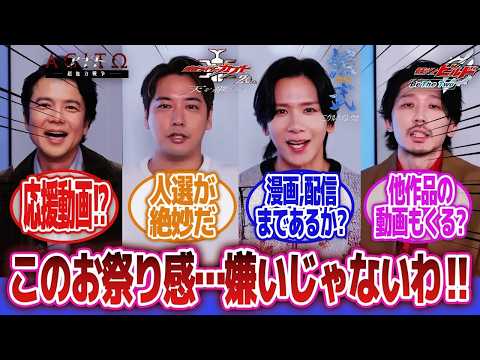
▶ Watch the original YouTube video
Kamen Rider Movie Project: Fan Predictions and Internet Reactions Analyzed
Toei Animation has announced an ambitious multi-title Kamen Rider movie project featuring several Heisei-era series simultaneously. The initiative combines theatrical releases with streaming exclusives, sparking widespread debate among fans about production quality, casting hints, and the future of tokusatsu filmmaking in the streaming era.
- What Happened
- Why It Matters
- Background
- Key Points
- Production Quality and Resource Allocation
- Streaming vs. Theatrical Distribution
- Casting Strategies and Implicit Signaling
- Historical Comparison
- Fan Community Reactions
- The Kamen Rider Drive Exclusion
- Perspectives on Project Viability
- Insights and Industry Implications
What Happened
Toei Animation has launched the “Kamen Rider Movie Project,” an unprecedented initiative to develop film adaptations of multiple Heisei-era Kamen Rider series in parallel. The project employs a viewer-participation format where audiences predict which series will receive theatrical releases through quiz-style engagement with support videos. While at least one theatrical release is confirmed, most adaptations are expected to premiere exclusively on the Toei Tokusatsu Fan Club (TTFC) streaming platform.
Why It Matters
This project represents a significant strategic shift for Toei as the studio adapts to declining theatrical attendance and the rise of streaming services. The simultaneous development of multiple properties raises critical questions about production resource allocation, content quality, and fan satisfaction. The outcome will likely influence how major Japanese studios approach multi-title franchises in the streaming era, affecting both tokusatsu and anime industries.
Background
The Kamen Rider franchise has a rich history of successful theatrical collaborations, most notably the 2009 “Kamen Rider Den-O & Kiva: Climax Deka” crossover film, which achieved critical and commercial success by concentrating production resources on two interconnected narratives. Since then, Toei has increasingly shifted tokusatsu content toward streaming platforms, with theatrical releases becoming more selective. This project continues that trend while expanding its scope to unprecedented levels.
Key Points
- Multi-Title Simultaneous Production: Toei is developing film adaptations for multiple Heisei-era Kamen Rider series concurrently, marking the studio’s largest-scale franchise project to date.
- Hybrid Release Strategy: Limited theatrical releases combined with TTFC streaming exclusives, reflecting industry shifts toward digital distribution.
- Viewer Participation Format: Audiences engage through prediction quizzes and support videos, though evidence suggests actual adaptations may already be predetermined.
- Quality Concerns: Fan communities widely express concerns that resource distribution across multiple projects will compromise production standards.
- Casting as Narrative Hints: Strategic cast appearances in promotional materials appear designed to subtly indicate which series will receive adaptations.
- Notable Omissions: Kamen Rider Drive’s exclusion from the project has generated significant fan criticism and speculation about production continuity issues.
Production Quality and Resource Allocation
The primary concern emerging from fan communities centers on production quality. The 2009 Den-O & Kiva collaboration succeeded because production resources concentrated on two interconnected projects, allowing top-tier directors, screenwriters, and cinematographers to deliver cohesive storytelling. The current project’s parallel production model distributes these resources across multiple titles simultaneously, creating significant quality management challenges.
Analysis of past Toei projects reveals a consistent pattern: as the number of simultaneous productions increases and streaming becomes the primary distribution method, overall project success ratings decline. Streaming-exclusive tokusatsu productions typically operate under tighter budget constraints, shorter shooting schedules, and shared staff assignments—factors that demonstrably impact visual quality compared to theatrical releases.
Streaming vs. Theatrical Distribution
The project’s emphasis on TTFC streaming exclusives reflects Toei’s broader strategic pivot away from theatrical releases. While economically rational for the studio, this shift generates mixed fan sentiment. Streaming platforms offer accessibility and lower production risk, but they cannot replicate the theatrical experience that defined memorable franchise moments for longtime fans. The loss of large-screen spectacle represents a significant departure from how previous Kamen Rider films shaped fan culture and community engagement.
Casting Strategies and Implicit Signaling
Toei has historically employed subtle casting strategies to signal which projects will receive adaptations. In the current project, specific cast members appear prominently in promotional materials in ways that suggest predetermined outcomes. For example, Kamen Rider Kabuto’s cast receives notably prominent positioning compared to supporting character appearances, suggesting Kabuto’s adaptation is already confirmed. Similarly, Kamen Rider Agito shows strong indicators of theatrical adaptation potential based on cast availability and narrative expandability.
This approach allows Toei to create a sense of fan participation and investment while maintaining predetermined production decisions. The viewer prediction format functions as engagement strategy rather than genuine decision-making mechanism.
Historical Comparison
| Project | Year | Titles | Release Format | Success Rating |
|---|---|---|---|---|
| Den-O & Kiva Collaboration | 2009 | 2 | Theatrical | ★★★★★ |
| Heisei Rider 10th Anniversary | 2011 | Multiple | Theatrical | ★★★★ |
| Showa Rider Adaptations | 2016 | Multiple | Hybrid | ★★★ |
| Movie Project (Projected) | 2024+ | Multiple | Streaming-Primary | ★★? |
This historical pattern demonstrates a clear correlation: as project scope expands and streaming distribution increases, overall success metrics decline. This trend reflects not coincidence but structural challenges inherent to resource distribution and quality management across multiple simultaneous productions.
Fan Community Reactions
Analysis of responses across Twitter, 5channel, and YouTube comments reveals three dominant themes:
Quality Concerns: Multiple fans express skepticism about Toei’s capacity to maintain production standards across numerous parallel projects. Comments like “If they’re making this many titles simultaneously, quality will definitely drop” reflect widespread doubt about the studio’s resource management.
Streaming Distribution Disappointment: Fans consistently express preference for theatrical releases, viewing streaming-exclusive content as a compromise on the franchise experience. The loss of large-screen spectacle represents a significant departure from traditional Kamen Rider film culture.
Title Selection Disputes: Significant criticism surrounds the apparent exclusion of Kamen Rider Drive from the project. Fans note that Drive’s narrative was compromised by post-series additions like the “Chase Revival” storyline, and question why the series lacks consideration for adaptation. This reflects broader fan investment in specific titles and their desired cinematic futures.
The Kamen Rider Drive Exclusion
Kamen Rider Drive’s apparent absence from the project warrants particular attention. The 2014-2015 series possessed distinctive worldbuilding and compelling character development, yet subsequent narrative additions—particularly the “Chase Revival” storyline—complicated the series’ legacy and fan reception. The exclusion likely stems from production staff discontinuity: the original producer, Katsuhito Omori, has not continued with subsequent Rider projects, meaning the creative team that completed Drive’s original narrative is unavailable for new adaptation work.
This situation illustrates a critical structural dependency within the Kamen Rider franchise: series continuity and adaptation viability depend heavily on original production staff availability. When core creative personnel transition to other projects, developing new theatrical content becomes significantly more challenging.
Perspectives on Project Viability
The project presents contradictory assessments. Optimistic interpretations emphasize Toei’s ambition to establish new franchise development models suited to the streaming era, potentially creating sustainable pathways for multiple series to receive cinematic treatment. Pessimistic analyses highlight the historical failure rate of parallel multi-project production, particularly when streaming becomes the primary distribution method.
Toei’s strategic positioning suggests the studio views this project as necessary adaptation to market realities rather than creative opportunity. Declining theatrical attendance and streaming platform dominance leave the studio limited alternatives for franchise expansion. However, this economic rationality may conflict with fan expectations shaped by previous theatrical experiences.
Insights and Industry Implications
The Kamen Rider Movie Project represents a critical juncture for Japanese tokusatsu and franchise filmmaking. The initiative tests whether major studios can successfully develop multiple properties simultaneously while maintaining acceptable quality standards in a streaming-primary distribution environment.
Success would establish a replicable model for franchise expansion in the streaming era, potentially influencing how anime and tokusatsu studios approach multi-title projects. Failure would reinforce the historical pattern that resource distribution across numerous simultaneous productions inevitably compromises quality, suggesting that selective, focused development remains superior to expansive parallel production.
The project’s outcome will likely influence broader industry practices regarding theatrical versus streaming distribution, staff continuity in franchise development, and fan engagement strategies. For the tokusatsu industry specifically, this project may determine whether theatrical releases remain viable for secondary franchise entries or whether streaming becomes the default distribution method for all but flagship titles.
Fan expectations suggest that sustainable success requires: (1) selective theatrical releases for at least 2-3 major titles, (2) retention of original production staff where possible to maintain narrative continuity, and (3) expanded streaming platform availability beyond TTFC exclusivity to maximize audience accessibility.
The franchise’s future viability depends on Toei’s ability to balance economic efficiency with quality standards and fan satisfaction—a challenge that extends far beyond the Kamen Rider series to influence the entire tokusatsu industry’s adaptation to the streaming era.